There is a formula for a fiftieth, and everyone has attended it. The marquee or the function room, the buffet, the playlist anchored somewhere around 1994, the speech that overruns, the disco that starts too early for anyone to dance to it. It is a fine formula. It is also identical to the last four fiftieths everyone in the room went to.
The difference between that party and one people still mention a year later is never the catering budget. It is whether the evening had a centre: one moment, at a set time, that could only have happened at this particular person's party.
Here is how to build one, at every budget, with the trade-offs stated honestly.
What fifty actually is
Worth pausing on, because it shapes what works.
Fifty is the first milestone where the guest list spans three generations: the birthday person's parents are often still there, and their children are old enough to participate properly. It is also the age with the deepest archive. Fifty years of photographs, four or five distinct eras of friends, and at least one story from 1989 that improves every time it is told.
And, usefully for us: fifty is the first arcade generation. Someone turning fifty this year spent their teens in the era of the machines. That matters later.
The parties that fail at fifty usually fail by treating it as a bigger fortieth. The parties that land treat the three-generation room and the fifty-year archive as the material.
Centrepieces that use the material
The assembled film
Messages and clips from everyone who has known them across all five decades, including the people who cannot attend, cut into ten minutes and shown at a fixed point in the evening.
At fifty this outperforms every other price point on the list, because the archive is deep enough to be genuinely moving. The school friend from 1985. The colleague from the first job. The parent, on camera, saying the thing they never quite say in person.
Suits: every fiftieth. Budget six weeks of chasing; the chasing is the work.
This is your life, done with discipline
A compère, a handful of planted guests, objects and photographs revealed one era at a time. The Victorian format works because it turns the archive into theatre.
The discipline is the hard part: twenty minutes maximum, no more than five segments, and the embarrassing material calibrated to the person rather than to the room's amusement.
Suits: birthday people who like being the centre of attention. Genuinely cruel for those who do not.
The commissioned game
This is what we build, so read the following as informed rather than neutral.
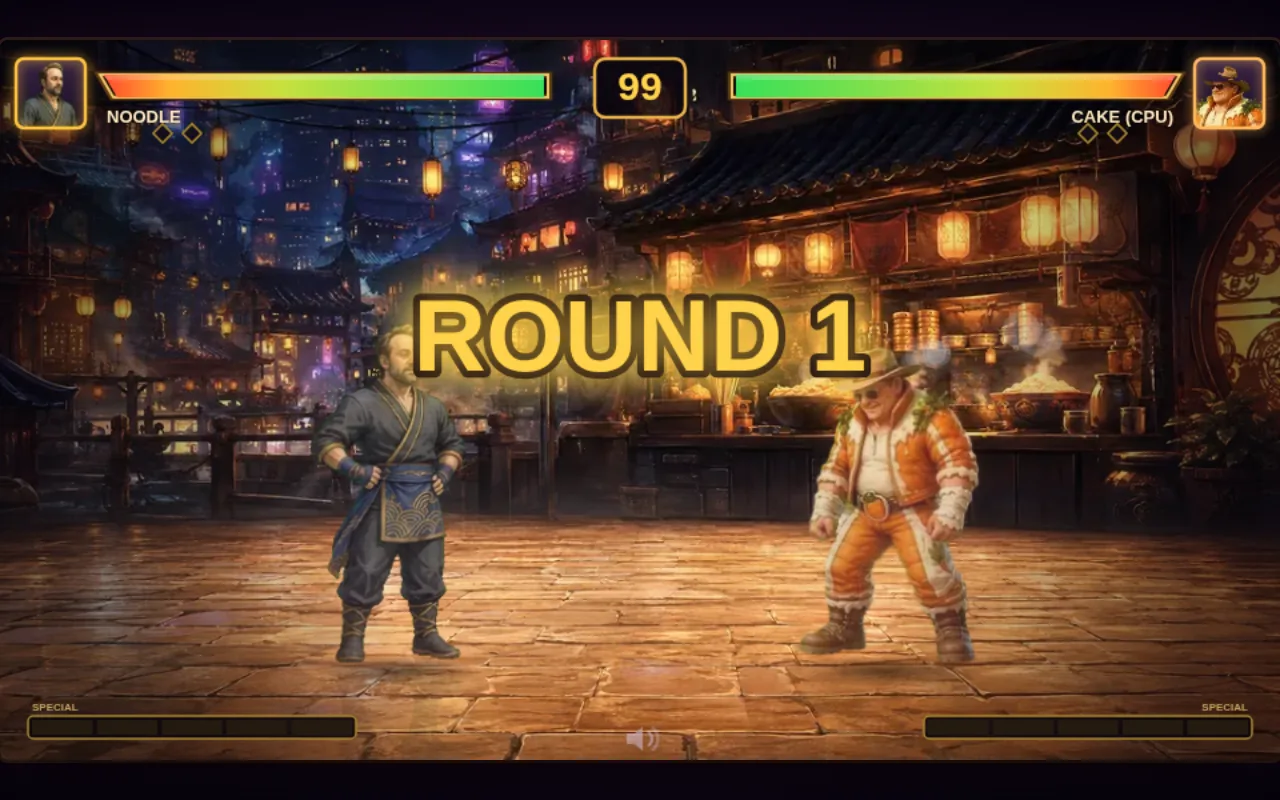
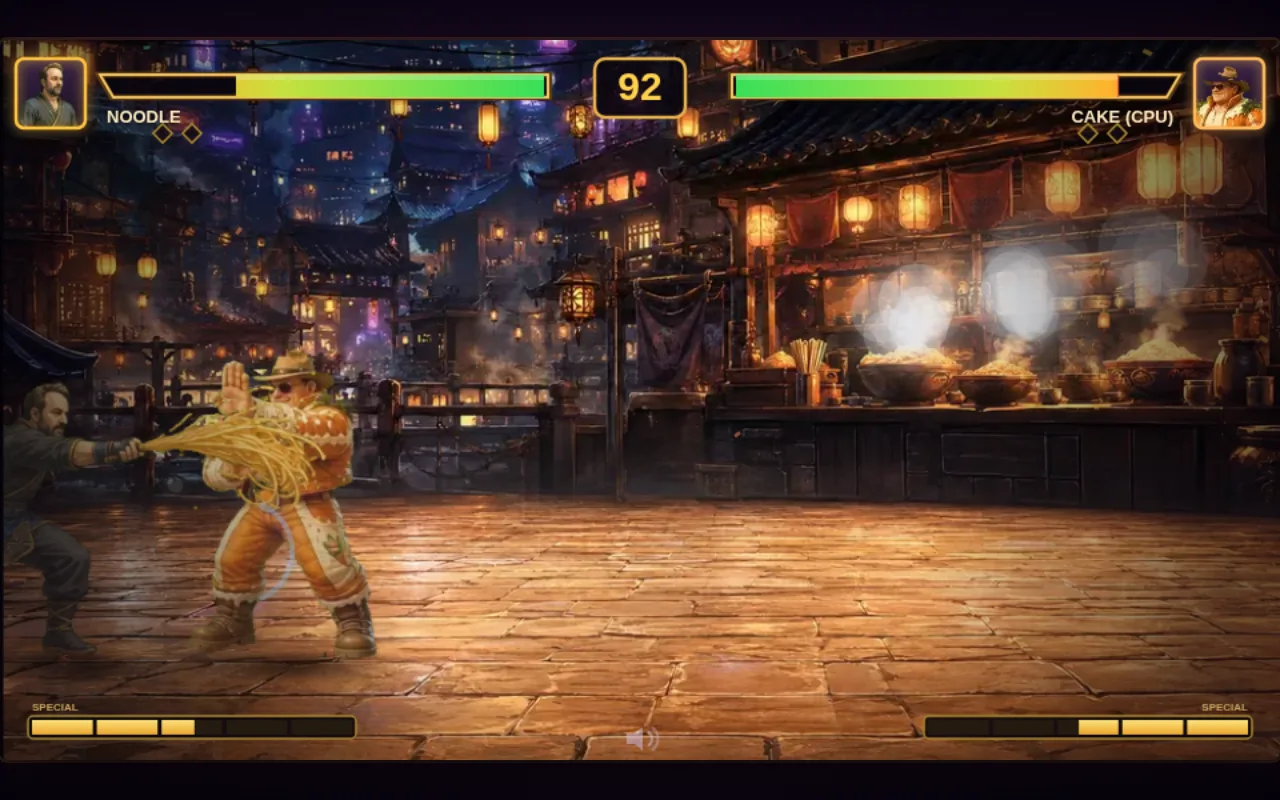
A bespoke game casts the birthday person as the hero, hand-painted from photographs, with guests painted in around them. Five decades of material becomes structure: an era per level, the 1989 story as a cutscene, the golf obsession as a boss fight.
At fifty specifically, the format has an unfair advantage. This is the generation that fed coins into the original machines, so a hand-painted arcade game does not read as a young person's gimmick. It reads as their own childhood, with them in it. The reveal, on a screen at the party with the room watching, tends to produce the exact silence-then-uproar a centrepiece exists for.
Practicalities:
- It arrives as a private web link on any phone or laptop, so after the reveal it goes around the room. Guests find themselves painted in and hand the phone to the next table.
- 8-Bit, from £349, is the natural fiftieth tier: three levels, a boss encounter, up to twelve painted cameos, original soundtrack, cutscenes. Twelve cameos covers the family plus the inner circle.
- 16-Bit, from £1,200, adds unlimited cameos and an arcade tournament mode, which converts the after-dinner lull into a bracket with a leaderboard.
- It is theirs to keep, replay and inflict on the grandchildren, long after the marquee is back at the hire company.
Our cost guide covers what moves the price, and the process covers the photographs and the brief, both of which can be gathered quietly if the party is a surprise.
Suits: birthday people with a sense of humour about themselves. Parties with a strong reveal moment planned. Families and friend groups splitting the cost.
The tournament with a ridiculous trophy
Darts, cards, boules, table tennis, whatever the birthday person actually plays. Bracket on the wall, engraved trophy, final held with maximum ceremony.
At fifty this earns its place by solving the three-generation problem: a fourteen-year-old and a seventy-eight-year-old can meet in a quarter-final, and that is the photograph of the night.
Suits: competitive families, venues with space, birthday people who would rather compete than be toasted.
The era-correct party
Not fancy dress in general. The specific year they turned eighteen, done properly: the music, the drinks, the typography on the invitations. Precision is the whole joke.
Suits: crowds who commit. Falls flat with guests who will not dress up, so know your room.
Making the three-generation room work
Whatever the centrepiece, three rules earn their keep at a fiftieth.
Schedule the moment for nine o'clock. Late enough that everyone has arrived and relaxed, early enough that the older generation is still there and the younger one is still sober.
Give the generations a shared task. The film, the tournament and the game all work partly because a grandmother and a teenager can participate in the same thing without either performing.
Protect the unstructured time. One centrepiece, not four. The room is full of people who have known each other for decades and mostly want to talk.
Surprise or not, decided honestly
The surprise fiftieth is the default assumption and it is right about half the time. The question is not whether they like surprises in general. It is whether they would want to have chosen the guest list.
Fifty is the age at which the guest list becomes political. Five decades produces friendships that have lapsed, colleagues who are complicated, and at least one person whose invitation would be a decision rather than a formality. A surprise party hands all of those decisions to the organiser, which is fine if the organiser knows the full history and dangerous if they do not.
The middle option, and the one that works most often: tell them it is happening, keep the contents secret. They control who is in the room; you control the film, the tournament, the reveal and the running order. All of the surprise, none of the risk of a guest list assembled from a partial map.
If it is a genuine surprise, one practical note. Everything on this list that involves gathering material from other people, the film especially, becomes considerably harder to keep quiet, because the person most likely to leak it is a delighted relative who assumes everyone already knows. Tell each contributor explicitly, in writing, that it is a surprise. It is a five-word addition to the message and it is the difference between a reveal and an awkward conversation in the kitchen in October.
The mistake to avoid
Outsourcing the personality. A magician, a band and a caterer can all be excellent and still leave the party generic, because none of them knows the birthday person. Spend the budget's centre on the one thing that could not be transplanted to anyone else's fiftieth, and rent everything else.
If the fiftieth in your diary is a colleague's, the corporate entertainment notes handle the office version. For the gift rather than the party, the milestone gift logic holds at fifty with the nostalgia dial turned further back, and if the arcade point above landed, gifts for people who grew up in arcades is written for exactly this generation.