It is the first question almost everyone asks, and most studios answer it with a shrug and a contact form. So here is the direct version.
A bespoke game from this studio starts at £99 and runs to £1,200 and beyond, depending on how much of it there is. Below, what sits behind those numbers, what genuinely moves the price, and how to work out which end of the range your occasion belongs at.
The short answer
Three tiers, all in pounds sterling, all quoted from a personal brief.
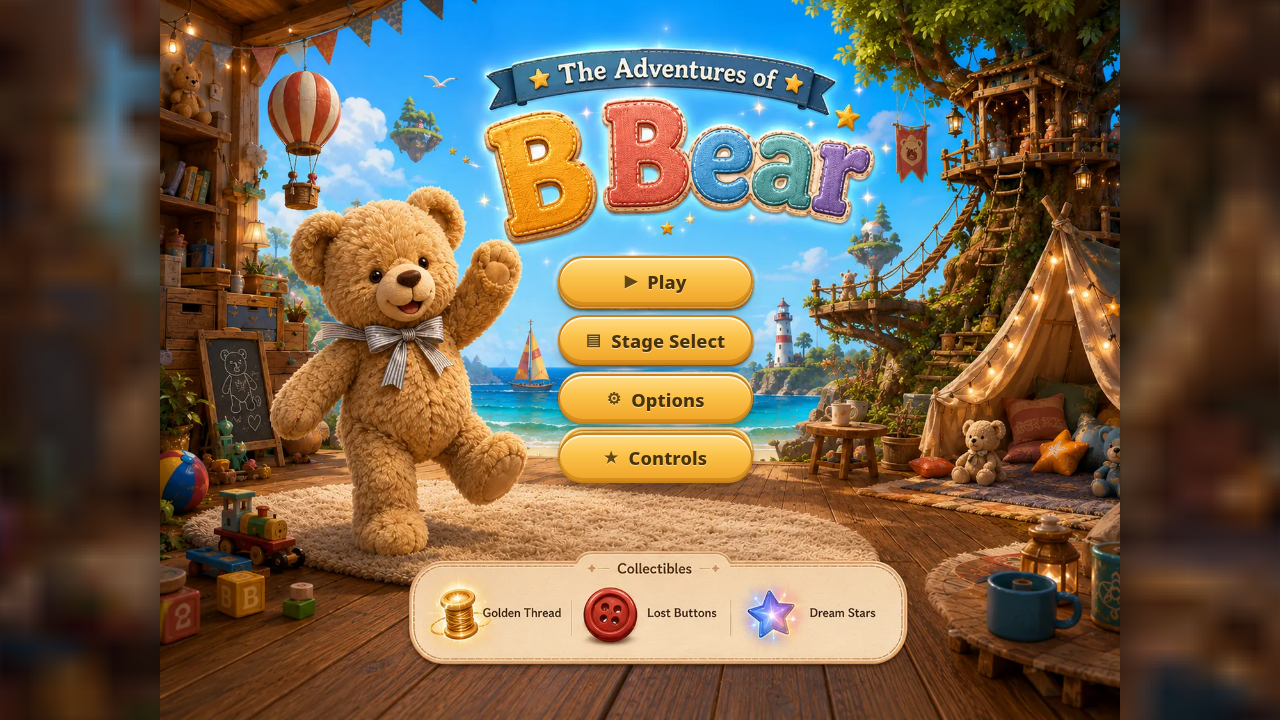
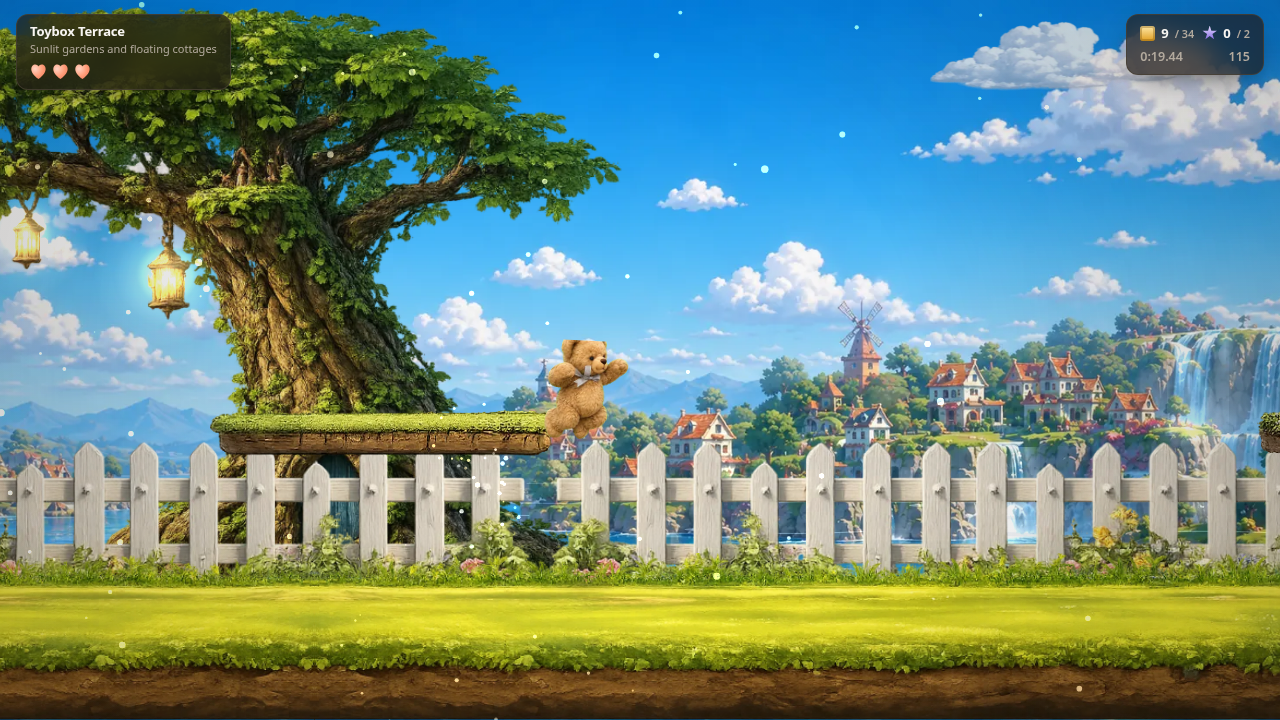
- 1-Bit, from £99. One hand-painted hero, one themed level of around ninety seconds of play, up to three guest cameos, an original short score, delivered as a private web link.
- 8-Bit, from £349. A hero and a co-star, three cinematic levels plus a boss encounter, up to twelve painted guest cameos, an original scored soundtrack, intro and outro cutscenes, delivered as both a web link and a downloadable build.
- 16-Bit, from £1,200. A full-length adventure or fighter, unlimited painted guest cameos, an original score, cinematic cutscenes throughout, an arcade tournament mode, web and downloadable build.
Design, code, art, score and delivery are included in all three. There is no separate licence fee and no per-player charge. You can see the full feature breakdown on the commissions page.
What actually moves the price
The tiers are not arbitrary brackets. They track the single thing that drives cost in a hand-made game: how much original work has to be drawn, written and scored from nothing.
Cast size
Every guest who appears in the game is painted from a photograph by hand. Three cameos is an afternoon. Twelve is a different proposition. An unlimited cast for a fifty-person wedding is a different proposition again. This is usually the biggest single lever on a quote, and it is the one most people underestimate when they first write their brief.
Number of levels
A single level is one setting, one set of mechanics, one piece of music. Three levels plus a boss encounter means three distinct worlds that have to look and play differently from each other, or the game feels padded. Each additional world carries its own art, its own layout design and its own scoring.
Cutscenes
Cutscenes are where a commissioned game stops being a novelty and starts being a story about specific people. They are also hand-animated, so they carry real cost. The 1-Bit tier has none. The 8-Bit tier has an intro and an outro. The 16-Bit tier runs them throughout.
Music
An original short score for one level is a very different job from a full soundtrack that changes character between worlds. Both are written for the commission rather than licensed, which is why even the entry tier includes original music.
Genre
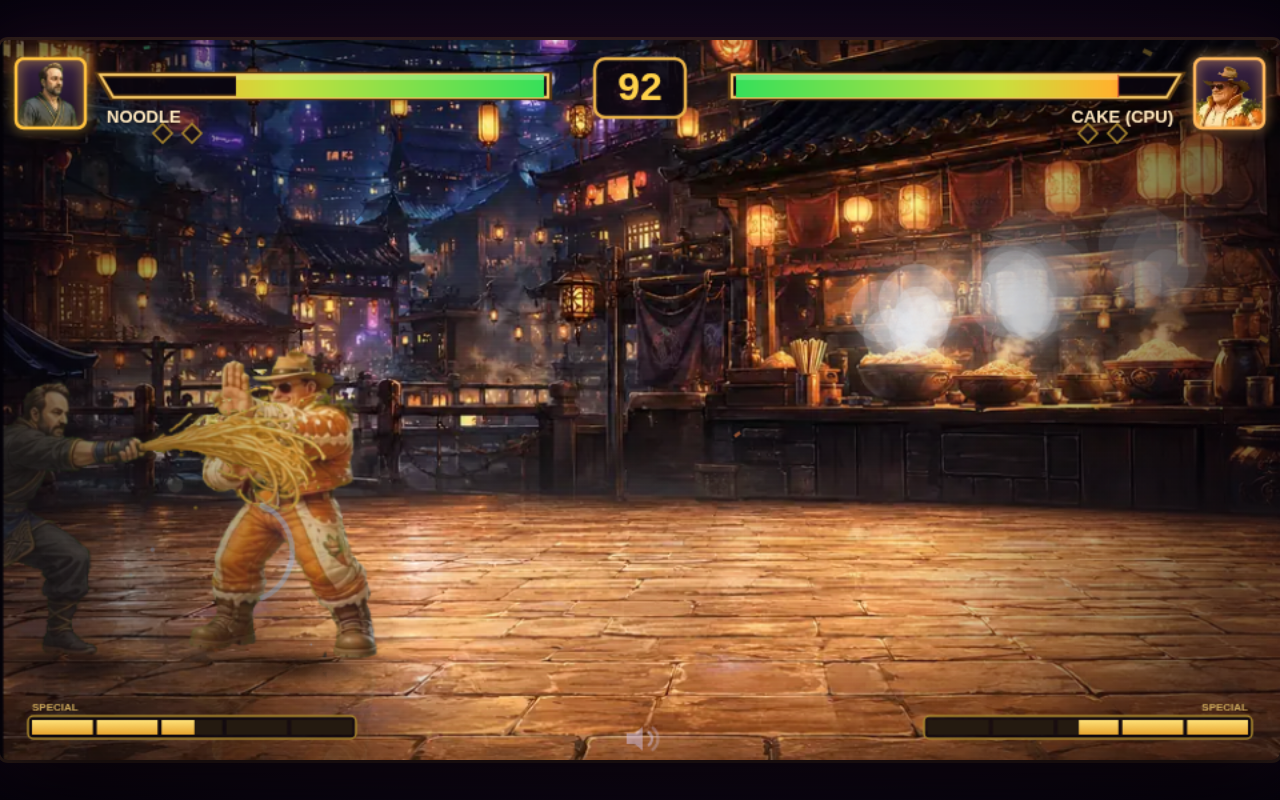
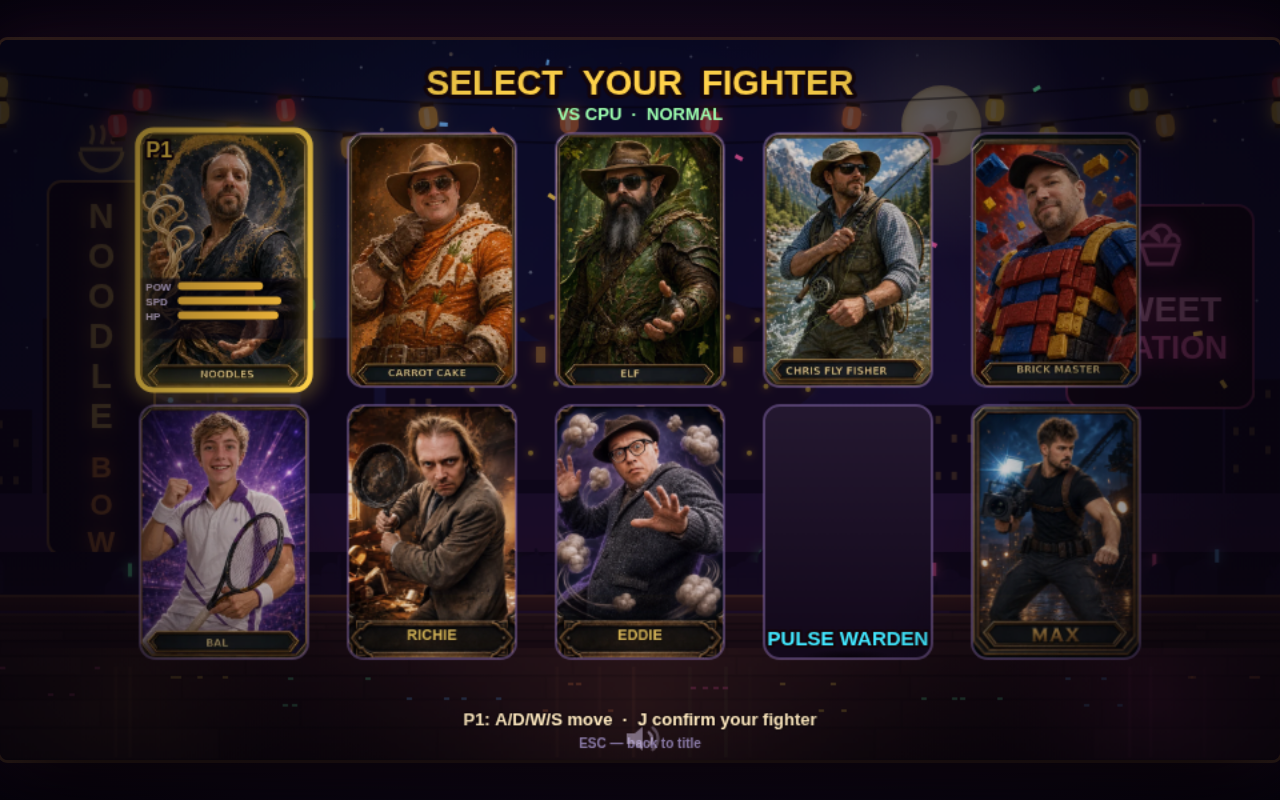
Some genres are simply more expensive to build well. A platformer needs level geometry and movement tuning. A fighter needs a roster where every character has their own moves, animations and taunts, which is why our ten-character fighter, Noodles, Cake & Elf, sits at the top end of what we do. If you are flexible on genre, say so in your brief. It gives us room to suggest the version of your idea that gets the most game for the money.
How to choose a tier
Work backwards from what you want to happen on the day rather than from the feature list.
If it is a gift for one person, and you want it to land as a surprise rather than as an event centrepiece, the 1-Bit tier does the job. Ninety seconds of play starring the person opening it is a genuinely startling thing to receive, and the private web link means they can show people on their phone straight away.
If guests are going to play it, you want the 8-Bit tier or above. Twelve cameos is roughly the point at which enough of the room is in the game that people start crowding round to find themselves. Cutscenes give the whole thing a beginning and an end, which matters when it is being played in a room rather than alone.
If it is the centrepiece, and you want people still talking about it months later, that is the 16-Bit tier. The arcade tournament mode is the difference between a thing people try once and a thing that runs all night with a leaderboard.
What you are not paying for
Worth stating plainly, because it is where a lot of quotes hide their money.
You are not paying separately for the art. You are not paying a licence to keep playing it. You are not paying per guest who loads the link on the night. The playable build is yours to keep, share and replay long after the event, which is the part most people find hardest to believe about the price.
There is also no charge for the concept stage being rejected. You receive painted key art and character sheets before the build begins, and nothing ships without your approval. If the direction is wrong, we redraw it. That is how the process works, not an extra.
Is it worth it against the alternatives
The honest comparison depends on what you are replacing.
Against a physical entertainment hire for a wedding or party, a commissioned game is usually competitive and sometimes cheaper, with the significant difference that you still own it afterwards. A hire leaves at midnight. We have written about that trade-off in more detail in our piece on wedding entertainment beyond the photo booth.
Against a conventional milestone gift, the arithmetic is different. Nobody buys a bespoke game because it is the cheapest option. They buy it because there is no other way to get the thing they actually want, which is a specific person cast as the hero of something. If you are weighing it against a watch or a weekend away, see our notes on gifts for someone who grew up on games.
For a company, the comparison is against event entertainment or branded merchandise, and there the calculation usually turns on reuse. A game that features the team keeps working after the event. There is more on this in corporate event entertainment ideas.
Getting an accurate number
A quote gets sharper the more specific your brief is. The three things that help most:
- The occasion and the date. Not because there is a fixed lead time, but because the schedule is agreed per commission and knowing the date shapes what is realistic.
- Roughly how many people you want painted in. An approximate number is fine. It is the single strongest signal for which tier fits.
- One thing that only your people would find funny. It tells us more about the tone of the build than a page of description, and it is usually the detail the finished game is remembered for.
Send those three things and you will get a real figure back rather than a range.
A note on the ranges
Every price above is a starting point, and we would rather say that clearly than surprise you later. Bespoke expansions are always welcome, and a commission that grows during the concept stage is normal. What we do not do is quote low and revise upward once you are committed. The quote you approve before the build begins is the quote.