Corporate entertainment has a specific difficulty that private events do not: a meaningful proportion of the audience does not want to be there.
At a wedding, everyone has chosen to attend. At a company milestone, product launch or team celebration, you have enthusiasts, people who came for the free bar, people who are anxious about being made to perform, and at least one person who is leaving at eight regardless. Anything requiring uniform enthusiasm fails against that audience.
What follows is a set of options that survive it, with an honest note on who each one suits.
The rule that governs everything
The single most useful principle: allow variable intensity.
Good corporate entertainment lets someone participate fully, watch from the side, join halfway through, or drift away without it being noticed. Bad corporate entertainment requires every person in the room to do the same thing at the same time with the same enthusiasm, which guarantees that the third of the room who did not want to will visibly not want to.
This rule eliminates most of what gets booked. Enforced improvisation workshops fail it. Whole-room quizzes with fixed teams mostly fail it. Anything with a compere calling people to the front fails it badly.
Options that work
A tournament with a bracket
Table football, darts, shuffleboard, a racing setup. People sign up if they want, everyone else watches and heckles, and the final draws a crowd because a final always does.
It passes the intensity rule cleanly. It also mixes departments, which is usually the unstated objective of the entire evening.
Suits: most company events. Requires floor space and something worth winning.
Something skilled to watch
A close-up magician working the room, a caricaturist, a barista or bartender doing something technically impressive, a musician taking requests. The audience sets its own level of involvement, from full attention to background.
Suits: drinks receptions, venues with awkward layouts, audiences that need warming up before anything more structured.
A commissioned game featuring the team
We build these, so read the following as informed rather than neutral.
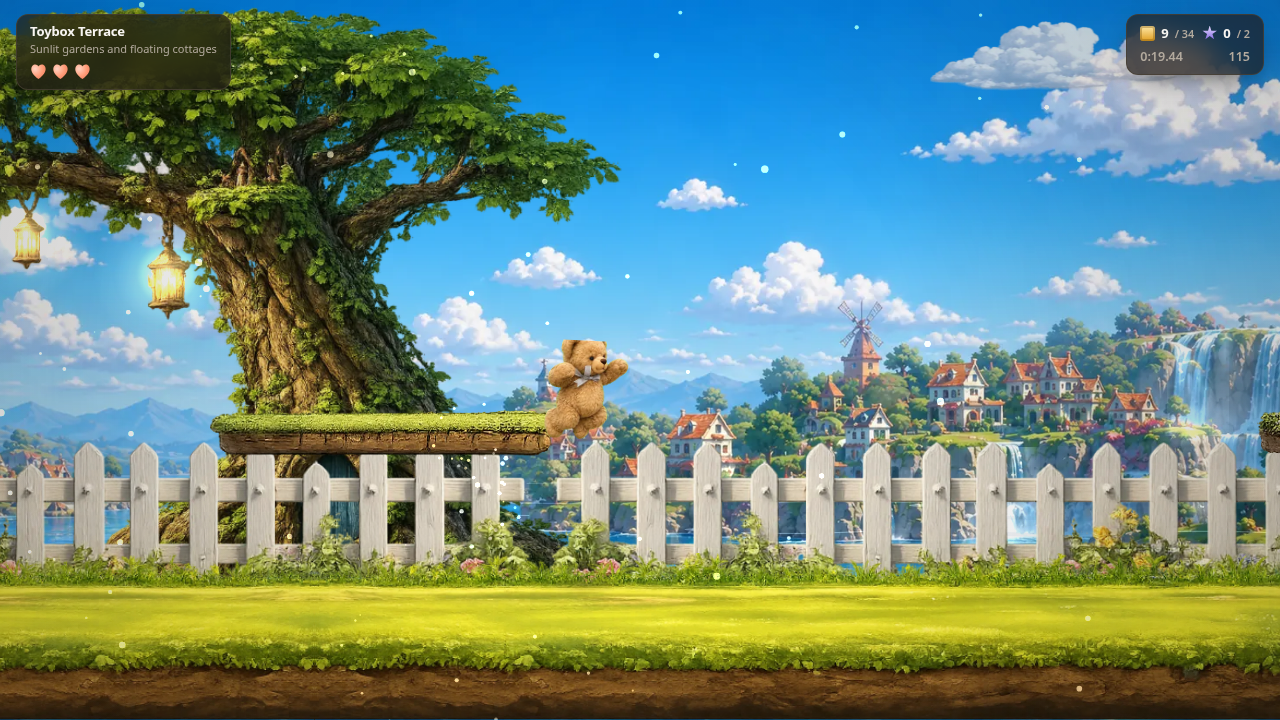
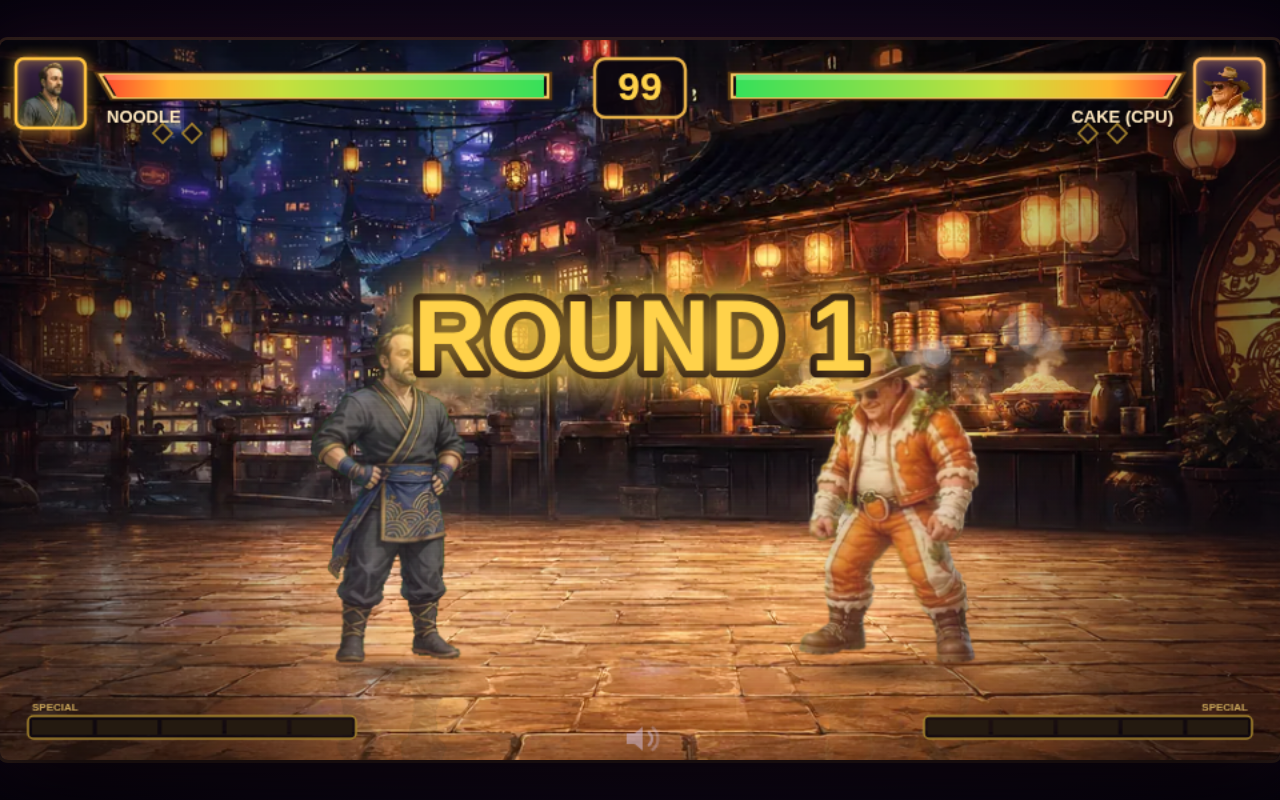
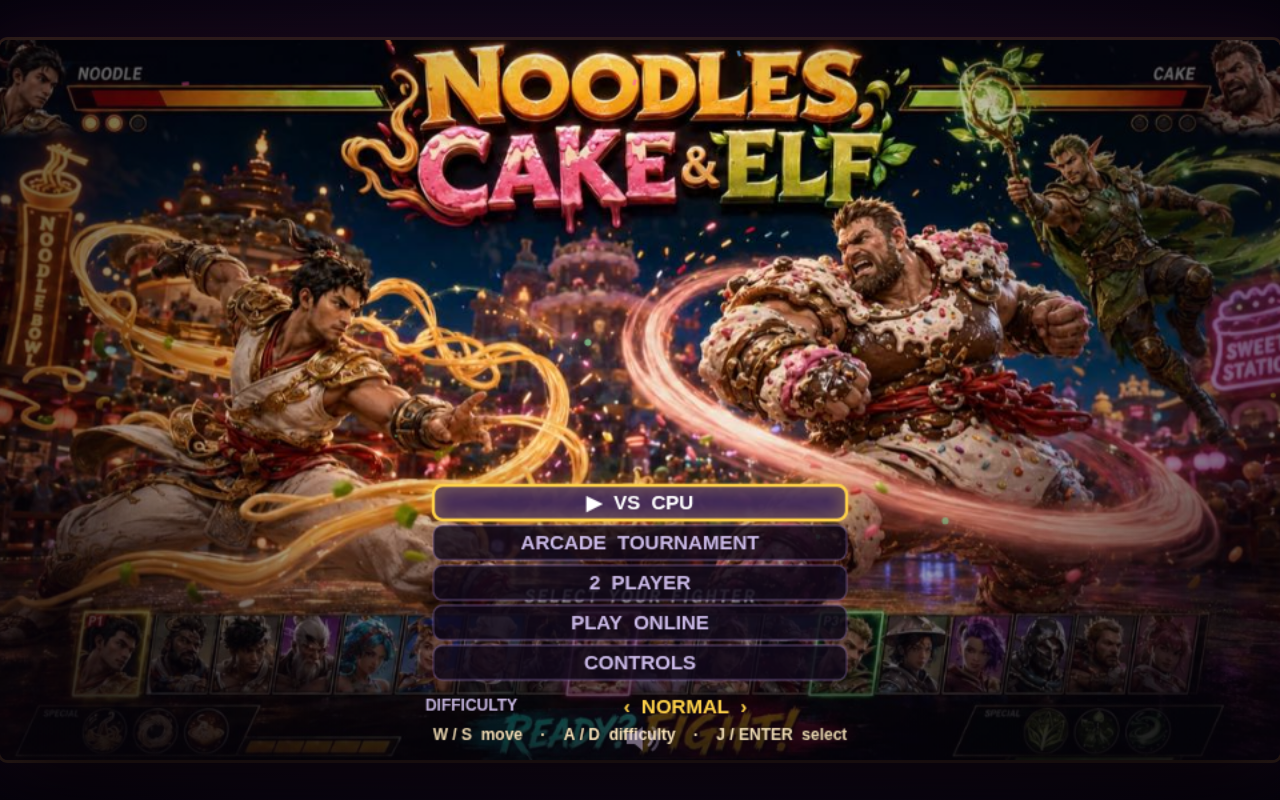
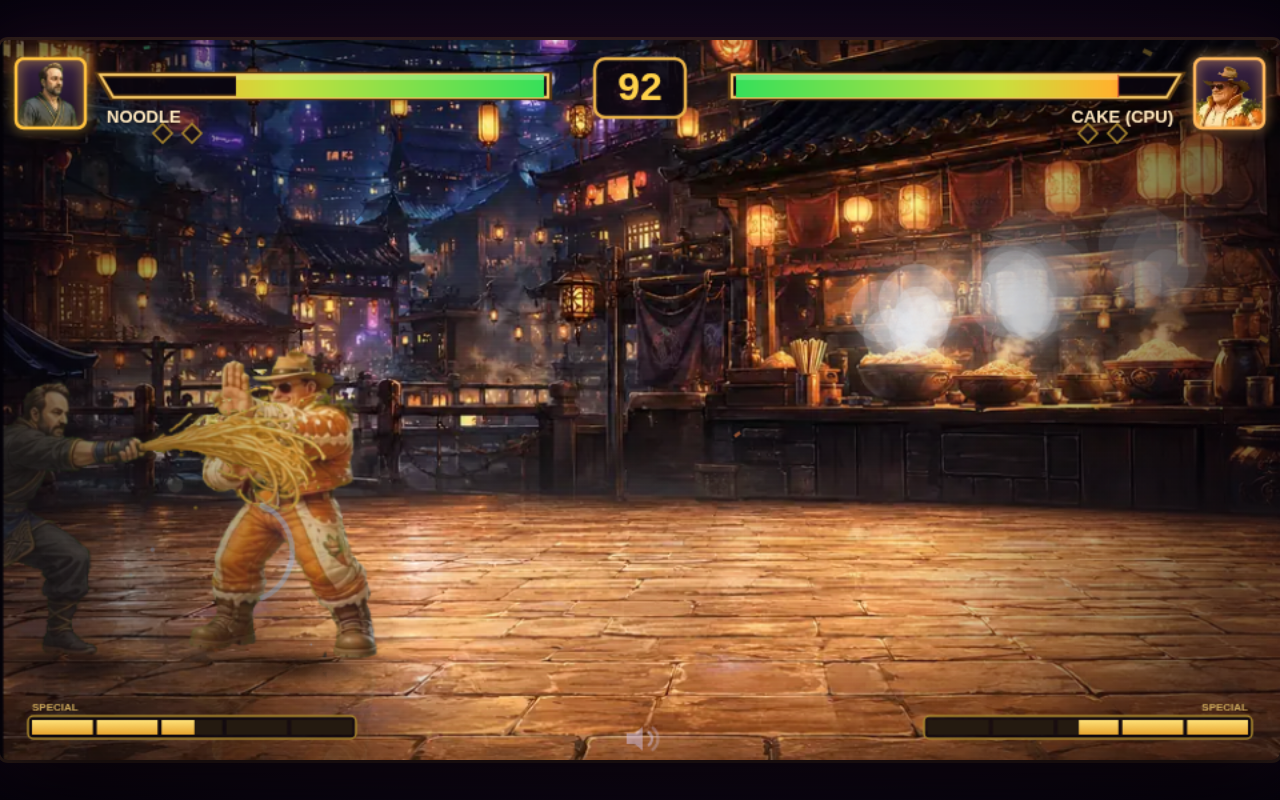
A bespoke game casts specific people as the characters, hand-painted from photographs, in a game built around a brief you provide. For a company event, the reason it works is that it is unmistakably about this team rather than about teams in general, and it does not require anyone to stand up.
The practical shape of it:
- It arrives as a private web link that works on any phone or laptop. No hardware to hire, no queue, no app to install, and the whole room can be in it simultaneously.
- Colleagues appear as painted characters: up to three cameos at the 1-Bit tier from £99, up to twelve at 8-Bit from £349, unlimited at 16-Bit from £1,200.
- The 16-Bit tier includes an arcade tournament mode, which combines this with the bracket idea above into a single thing that can run all evening with a leaderboard.
- It is yours to keep, share and replay long after the event, which is the part that distinguishes it from hired entertainment.
That last point tends to be what makes the budget defensible internally. Most event spend evaporates at midnight. A build that features the team keeps working afterwards, whether that is at the next all-hands, in an onboarding pack, or simply as the thing people still open a year later.
Genre is chosen to fit the brief rather than picked off a shelf. Our recent builds include a ten-character cinematic fighter, a storybook platformer and a surf simulator, which suited three entirely different stories. If you have a strong idea, bring it. If you do not, that is genuinely useful, because it gives us room to propose the format that gets the most out of your cast.
Our cost guide sets out what moves the price, and the commissions page has the full feature breakdown.
Suits: milestone anniversaries, product launches, team celebrations, and any event where you want something that outlasts the evening.
Anything specific to your brand, in terms of how far the game should carry your identity, is worth raising directly in the brief so it can be scoped and quoted properly rather than assumed.
A properly written quiz
Quizzes get dismissed because most are generic. A quiz written specifically about the company, its history, its running jokes and its people is a completely different object, and it is cheap.
The rule still applies: keep teams self-selecting, keep it to half an hour, and do not make anyone read answers aloud.
Suits: smaller companies with enough shared history to fill thirty questions. Poor fit for organisations that have grown fast or merged recently.
Food as the entertainment
A chef doing something in the room, a tasting with someone who can talk, a menu built around the company's origins. It occupies people who do not want to be entertained, which is a substantial constituency.
Suits: senior audiences, client-facing events, anywhere the tone needs to stay conversational.
What to consider before booking anything
Who is the audience, honestly? A company of thirty who see each other daily needs something different from three hundred people across four offices meeting once a year. The second group needs mixing mechanisms; the first does not.
What is the event actually for? A product launch has an external audience and a message. A team celebration has an internal audience and no message. Entertainment that ignores this distinction feels off, even when it is good.
Is there a moment, or just a duration? Most corporate events are a duration: three hours of standing. Adding a moment, a single thing that happens at a fixed point and gathers everybody, is usually the highest-value change available.
Does it need to survive? If someone will ask what the return was, prefer things that persist. This is where commissioned work, filmed content and written material have a structural advantage over hire.
Getting it signed off
Corporate entertainment has a step private events do not: somebody has to approve the spend, and that person was not in the conversation where it sounded like a good idea.
Three things make that easier.
Attach it to the occasion, not the calendar. "Entertainment for the summer party" is a cost line. "Marking twenty years since the company was founded" is a reason. The second survives scrutiny; the first gets trimmed first when budgets tighten.
Say what remains afterwards. Most event spend is consumed on the night. If part of what you are buying persists, whether that is film, photography, written material or a commissioned build, name it explicitly. It converts an expense into an asset in the conversation, which is frequently the difference between approval and deferral.
Price the alternative honestly. The comparison is rarely against doing nothing. It is against a larger bar tab, a better venue, or branded merchandise that ends up in a drawer. Setting your proposal beside those makes the case far better than presenting it in isolation.
One practical note: if you are considering anything commissioned, get the quote before the budget conversation rather than after. A real figure with a defined scope is a straightforward decision. A range with a question mark invites a request to come back later, and later is usually too late for anything with a lead time.
The mistake to avoid
Framing entertainment as development. The moment something is described as team-building, a meaningful fraction of the room decides it is work and behaves accordingly. Celebration and development are different activities and mixing them produces neither.
If the occasion is one person rather than the whole company, the reasoning is different and we have set it out in retirement gift ideas for a colleague. And if you want to understand what commissioning involves before putting it into a budget line, the process is documented here, including the approval gates that let you change direction before anything is built.