The commission form asks for up to three photographs. In practice one good one is frequently enough, and the difference between a good one and a bad one has almost nothing to do with the camera.
Here is what is actually useful, and why the pictures people send first are usually the wrong ones.
What the photograph is for
It is reference, not source material. Nothing from it appears in the game.
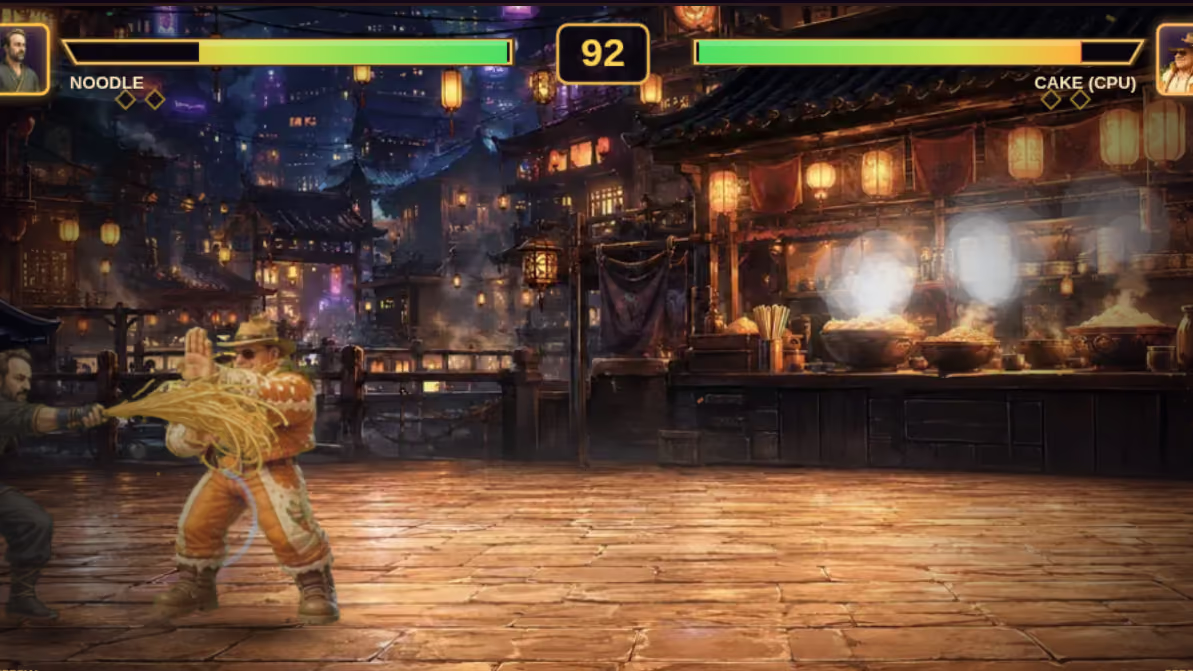
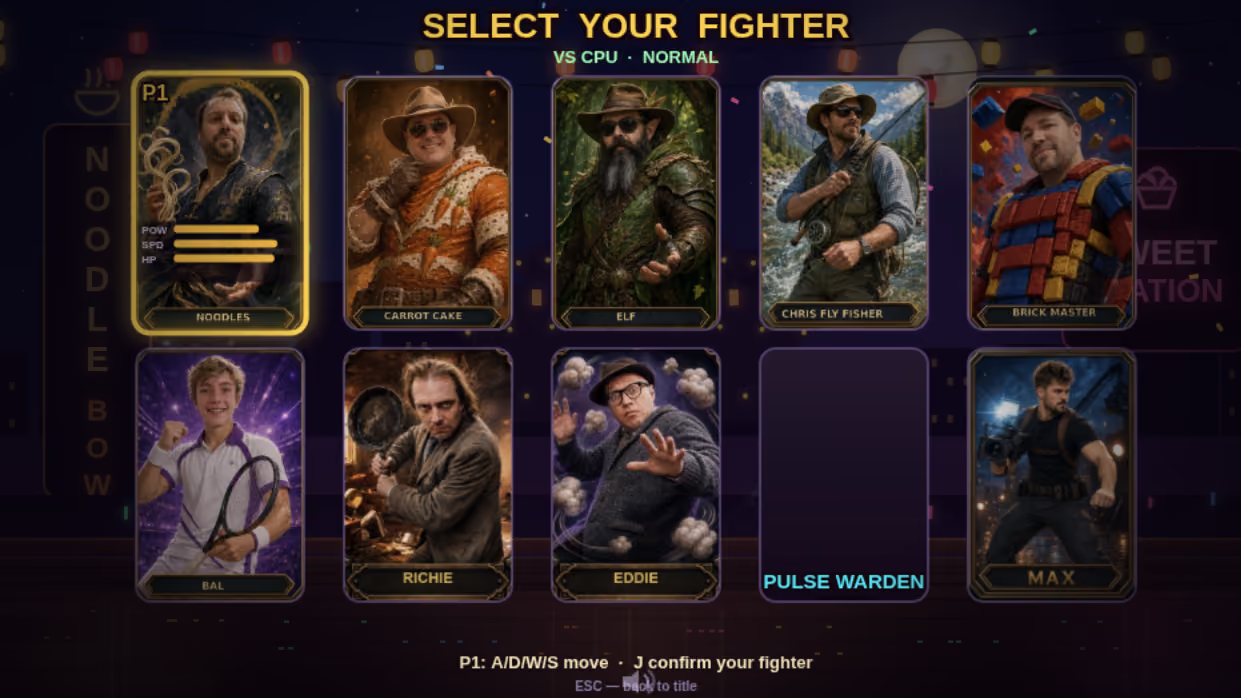
The character is painted fresh, in the game's own style, at the size the game needs, in the poses the game uses. What the photograph provides is information: what this person looks like, how they stand, what their proportions are, what they wear.
That matters because it changes what makes a photograph good. Sharpness and resolution are close to irrelevant. What is needed is information about a person, and a slightly soft picture of somebody standing naturally contains far more of it than a crisp studio portrait of them performing.
The one photograph to send
If you send only one, make it this: full length, standing, natural, in daylight.
Full length, because a game character is seen at full height and the way somebody stands is most of what makes them recognisable at a small size. A headshot gives the least informative part of the person for this purpose.
Standing naturally, because posture is a signature. People stand in particular ways and it is instantly recognisable to anyone who knows them.
Daylight, because it shows the actual colours of hair, skin and clothing without a colour cast. A photograph under a warm indoor bulb makes everything orange and the information about colour is gone.
Plain-ish background, because it makes the outline of the person readable. Not essential, just helpful.
Why posed photographs are the worst ones
This surprises people, because the instinct is to send the nicest picture.
A wedding photograph, a studio portrait or a professional headshot shows somebody in clothes they do not normally wear, in a pose they were told to hold, with an expression they were asked for. It is a picture of a person performing.
Painted into a game, that produces a character who looks like they are at a wedding. Not like the person.
The badly lit photograph of them in the kitchen, mid-sentence, in the jumper they always wear, is far more useful. It contains the thing you actually want reproduced.

The second and third photographs
If you have three, spend the extra two like this.
One from the side or at an angle. Not for the likeness, for the proportions. It tells us whether somebody is broad or narrow from a direction the front view cannot show.
One close-up of whatever makes them them. The specific glasses. The tattoo. The hair as it actually falls. The thing they always wear. If somebody asked you what is distinctive about this person, the answer to that question is the third photograph.
That third one does a disproportionate amount of the work. At the size a character appears, a face is a handful of marks; what the eye recognises is silhouette and one or two signature details. That is set out in more depth in how a photograph becomes a character.
Specific cases
Children. Same rules, plus one addition: a photograph of them doing something rather than sitting for a picture. Children performing for a camera all look like children performing for a camera.
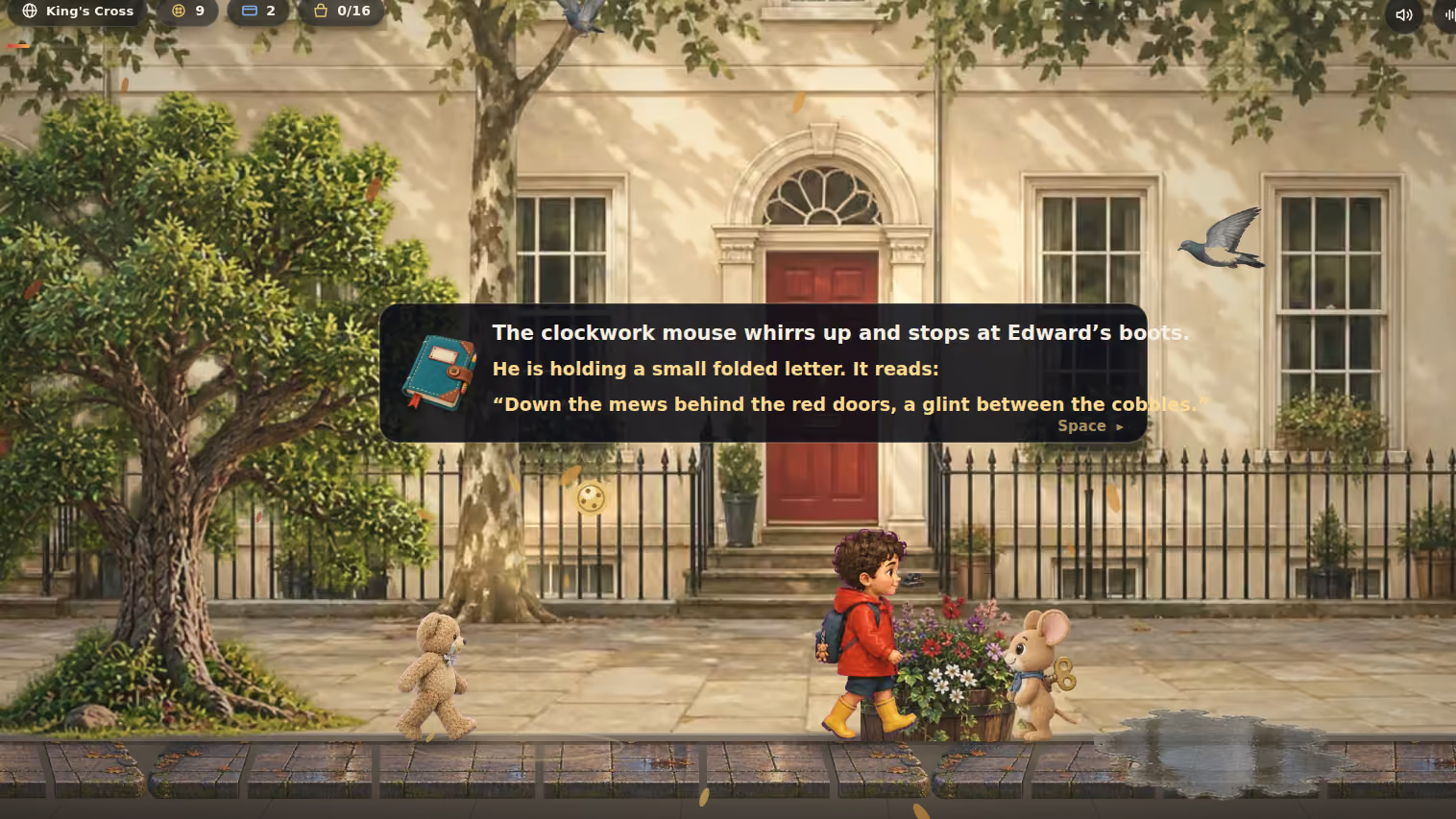
Toys. Photograph it as it is. Do not clean it, repair it or arrange it nicely. The wear is the identity, which is the whole argument in turning a real teddy into a playable character.
Older or deceased relatives. Old and damaged photographs are frequently fine. Posture, build and clothing survive fading and creasing perfectly well. Send what exists; it is usually more usable than people expect.
Groups. A group photograph is useful for showing how people relate in size, but individual pictures are better for each character. If you only have the group shot, say so and we will work from it.
What the form takes
Practically: up to three files, JPEG, PNG or HEIC, up to 15MB each. That covers anything a phone produces without any conversion on your side.
HEIC is included deliberately, because it is what iPhones produce by default and asking people to convert their photographs before they can send them is a poor first step in a commission.
Permission matters
One thing worth being direct about.
If the photographs are of somebody other than you, particularly if they are of a child, you need to be entitled to share them. The commission form asks you to confirm this, and it is a real question rather than a formality.
For most commissions this is straightforward: a parent sending pictures of their own child, or somebody sending a photograph of their partner. Where it is less straightforward, for example a workplace commission involving colleagues, everybody in it should have agreed individually and have a way to decline without explaining why.
What this means
Send the casual photograph, not the good one.
Full length beats a headshot, every time, for this purpose.
And tell us what is distinctive about them. A sentence about the jumper they always wear is worth as much as a fourth photograph.
What happens next with those photographs is in how commissioning a custom game works, and what else to put in the brief is in how to write a brief for a custom game.