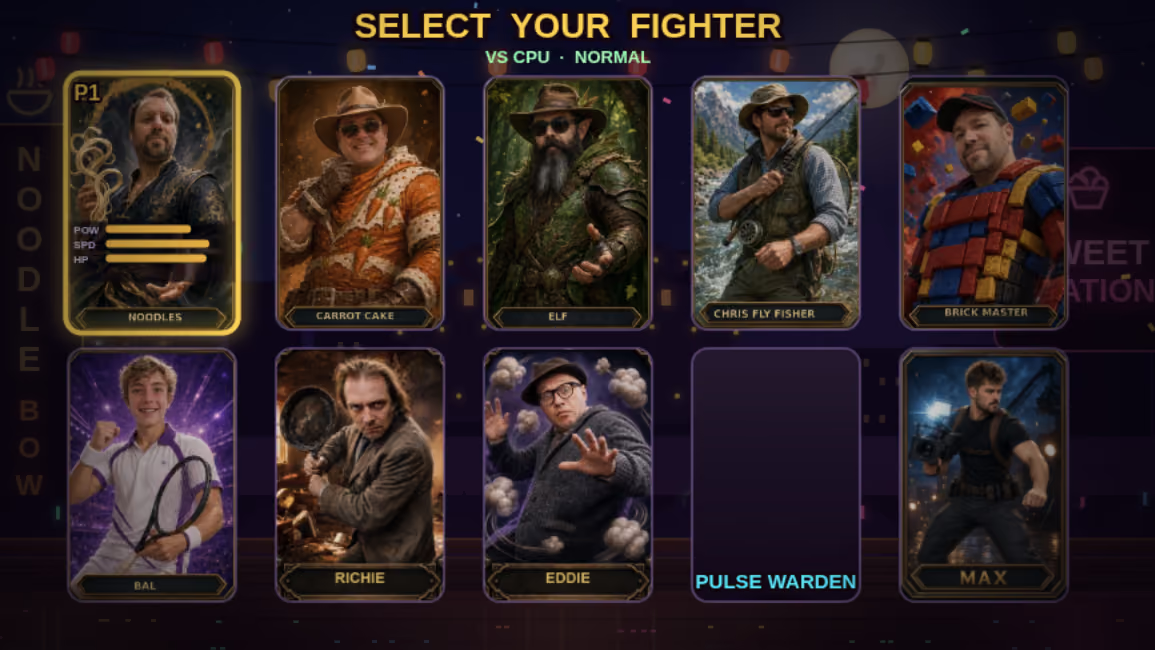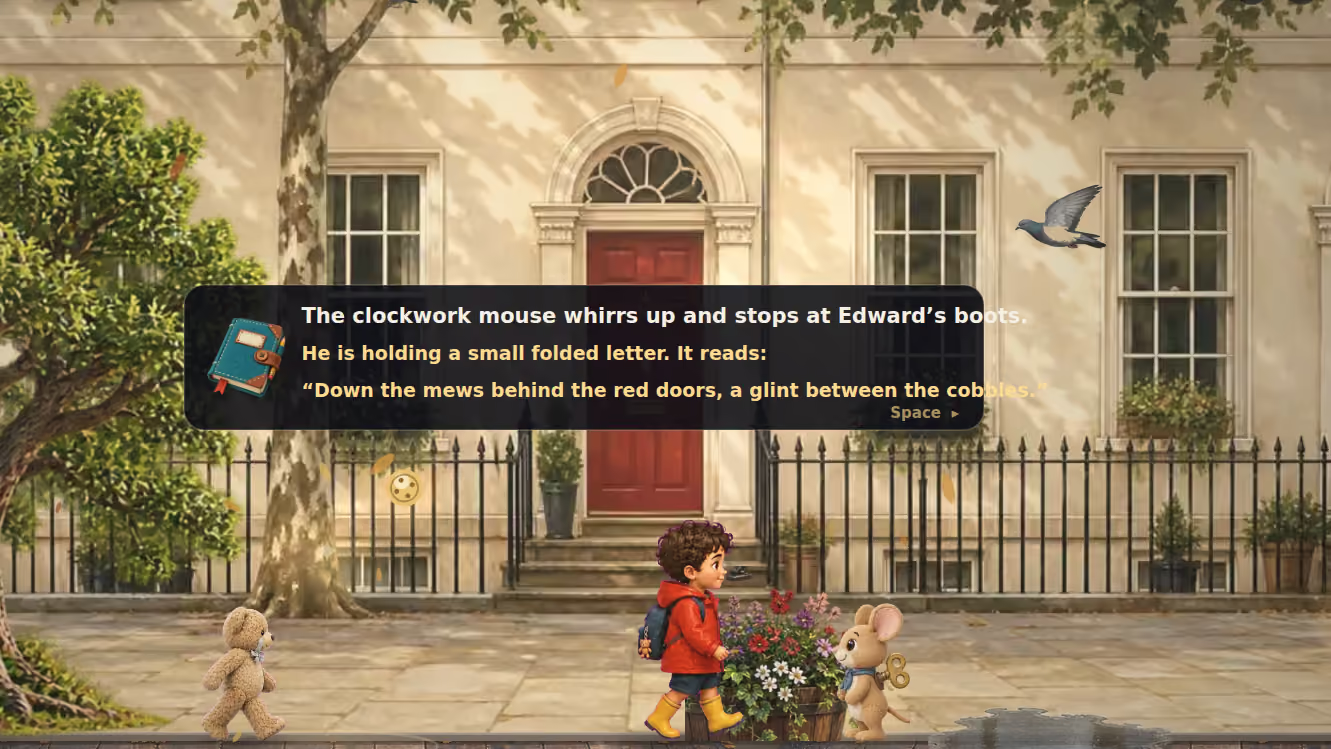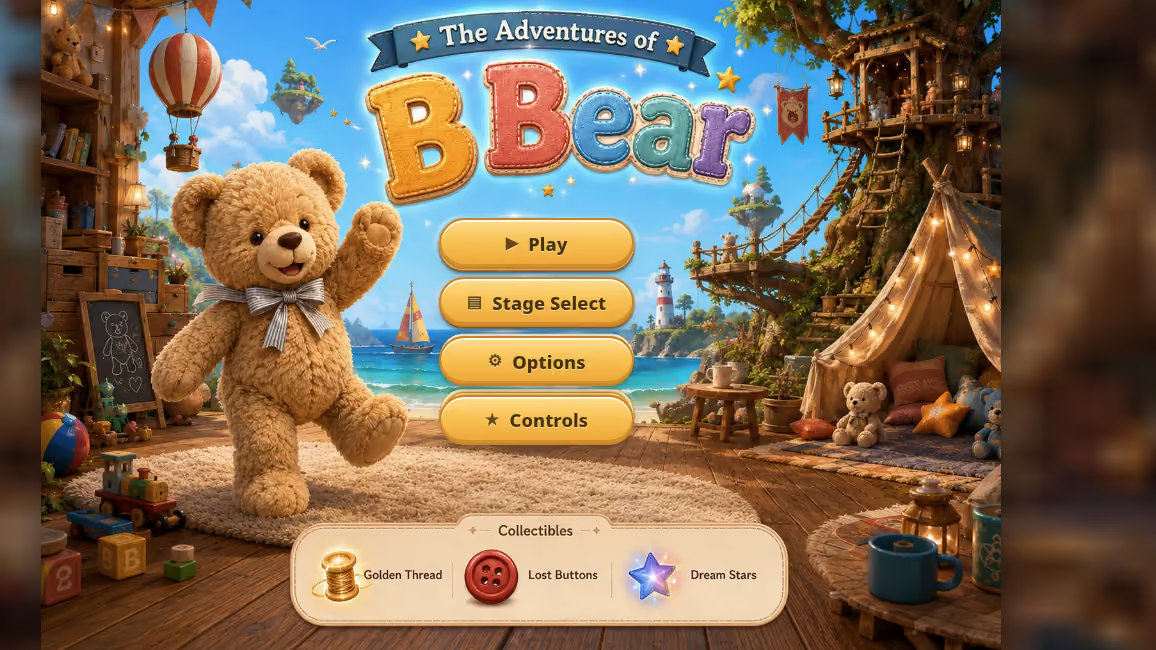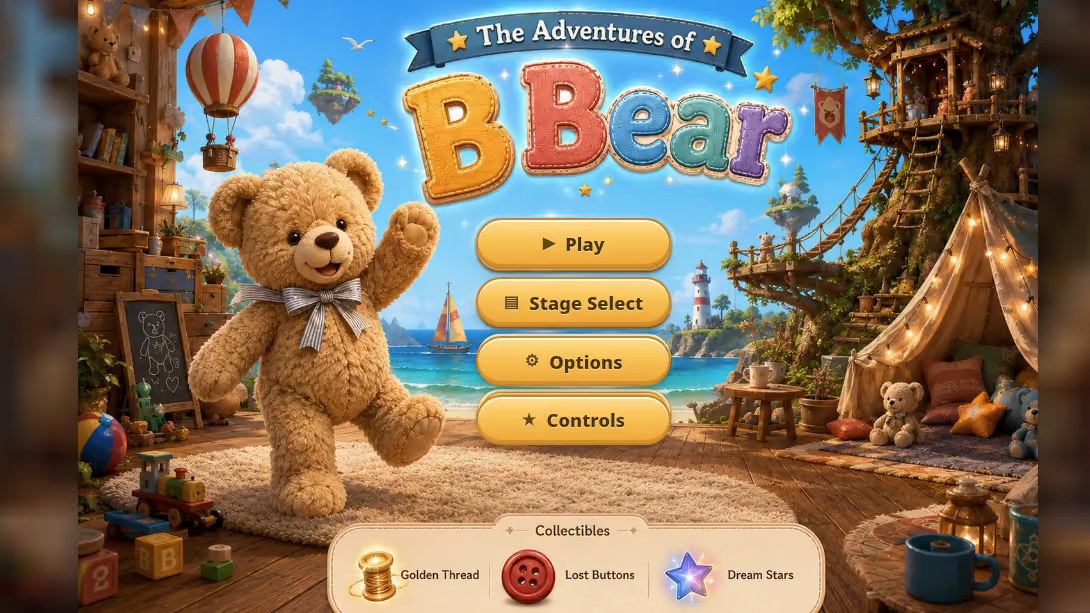
A child's teddy is not a generic bear. It is a specific object with a specific history: an ear that was resewn, an eye that never got replaced, a patch worn bald from being held in one particular way.
Getting that into a game is not a drawing problem. It is a series of decisions about what to keep, and the wrong decisions produce something technically accurate that the child does not recognise.
Three photographs is enough
The useful set is smaller than people expect.
Standing, from the front, in decent daylight. This is the reference the whole character is built from.
From the side. Not for the likeness, for the proportions. A toy that is round from the front and flat from the side is a different shape from one that is round both ways, and it changes how the character is drawn in motion.
A close-up of whatever makes it theirs. Whatever a parent would point at if asked what is special about it. That detail is doing more work than the rest of the photographs combined.
Daylight beats a lamp, a plain background beats a busy one, and the toy sitting up beats the toy lying down. Beyond that, a phone camera is entirely sufficient.
Keep the damage
This is the decision that matters most and the one people get wrong.
The instinct when painting somebody's toy is to present it well: even the fur, straighten the ear, restore the missing eye. It comes from a good place and it is precisely wrong.
The wear is the identity. A bear with both eyes is a bear. A bear with one eye and a slightly wonky ear is their bear, and a four-year-old will tell you the difference before the title screen has finished. Tidying it up produces something that reads as a toy from a shop, and the entire point of the exercise evaporates.
So the resewn ear stays resewn. The bald patch stays bald. If the ribbon has been lost, the ribbon is gone. The painting is of the object as it is now, not as it was when it was bought.
The only exception worth making is dirt that is genuinely just dirt. Nobody's attachment is to a stain from a car journey.

Making something stiff look alive
Here is the interesting technical problem. A teddy does not have joints. Its arms do not swing and its knees do not bend, and animating it as though they did produces something that is not the toy any more.
The answer is to move the whole body rather than its parts.
A stiff character walks by leaning into the stride, rising and falling with each step, and tipping slightly side to side. Those are three transformations applied to one drawing, and together they read unmistakably as walking without a single limb moving.
It is also cheaper than drawing a full articulated cycle, and better, because it is the truth about the object. The bear is being carried along by its own momentum, which is exactly how a bear moves when a child is running with it.
Where poses are drawn, they stay in the toy's vocabulary: squashed slightly on landing, stretched slightly at the top of a jump. Squash and stretch is the oldest trick in animation and it suits a soft toy better than almost any other subject, because a soft toy genuinely does deform.
The timing of the cycle still has to come from distance covered rather than from a clock, or the bear skates, and that applies whatever the character is made of. It is set out in how to make a character walk without it looking wrong.
Size it against the world, not the frame
A practical detail that catches people out.
A character is drawn at a size measured in the game's own units, not at whatever size the source image happens to be. The bear is a particular height relative to a platform, and that relationship is fixed by the game, not by the resolution of the painting.
Get this wrong and the character is subtly the wrong scale against the scenery, which nobody can name and everybody feels. It is also why the artwork can be replaced with a better version later without anything moving: the geometry never referred to the picture. That separation is the subject of why game artwork gets drawn twice.
Who else should be in it
Once the bear exists, the obvious extension is the rest of the toys.
A rabbit who is always in the same place. The dog with one ear. Whatever sits on the shelf and never gets played with but would be missed. These make excellent collectibles and excellent characters, and each one costs a fraction of what the main character cost because the style and the approach already exist.
It is also the single best replay lever available, for reasons set out in what makes somebody open a game twice: every additional recognisable thing is another moment of "that's mine".
What this means for a commission
Photograph the toy as it is. Do not clean it, do not repair it, do not pose it nicely.
Tell us the story. Which ear was sewn, who did it, what it is called. The name matters more than anything: a game about B Bear is a different gift from a game about a bear.
And think about the supporting cast. The main character is the expensive part. The others are much cheaper and do a disproportionate amount of the recognising.
More on what this looks like as a gift is in turning your child's teddy into a video game.