A commissioned game is opened on the day. That is guaranteed, and it is not the interesting question.
The interesting question is whether it is opened in March, when the birthday is long past and nobody is watching. That is the difference between a gift and a card, and it is decided by a handful of design choices that cost very little.
Something different has to happen
The first run of any game is entirely novel. The second run is the same game minus the novelty, and something has to fill the gap.
The cheapest source is small variation. Not a different game, just enough that the second run is not a recording of the first.
Our chess opponent does this deliberately. An engine with no random element plays the identical first six moves in every single game, because it computes the same best move from the same position every time. A game whose opening you can predict from move one is not one you play twice. So the easier difficulties pick at random among reasonable moves at a set rate, which produces variety in the openings as a side effect of making them beatable. That mechanism is described in how a computer plays chess.
The limit matters. Enough randomness that runs differ; not so much that skill stops deciding the outcome, because a game you cannot get better at is a game with no reason to return either.
A number to beat
For short games this is often the whole answer, and it is close to free.
A score turns a completed game back into an incomplete one. There is always a better number, and the gap between what you got and what you could get is a small, permanent, self-renewing reason to press play.
Our platformer keeps a best score across the session. Fourteen collectibles in a level where you might reasonably find nine gives an immediate, obvious target that requires no explanation.
A timer does the same job from the other direction, and suits a game with a fixed route where the question is how efficiently you can take it.

Somebody to show it to
This is the one that is specific to personalised games, and it is by some distance the most powerful.
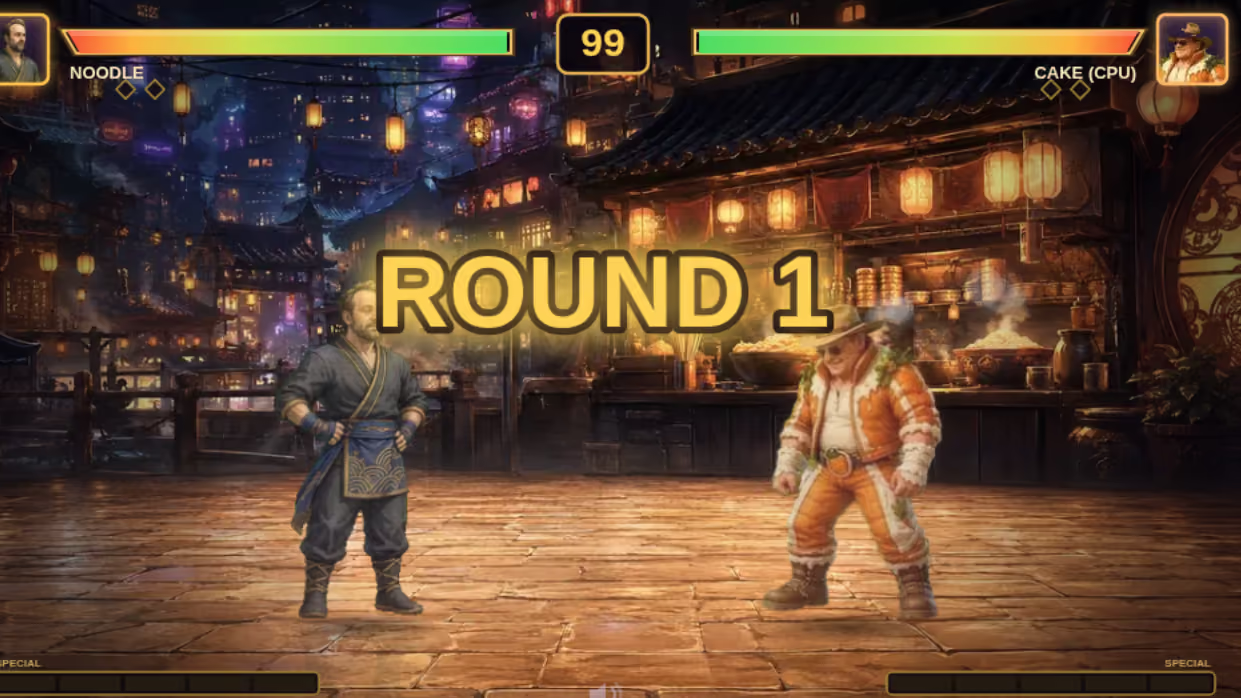
A game starring a family gets opened every time a member of that family visits. Not because the game is compelling, but because "you have to see this, you are in it" is a thing people say, and saying it requires opening the game.
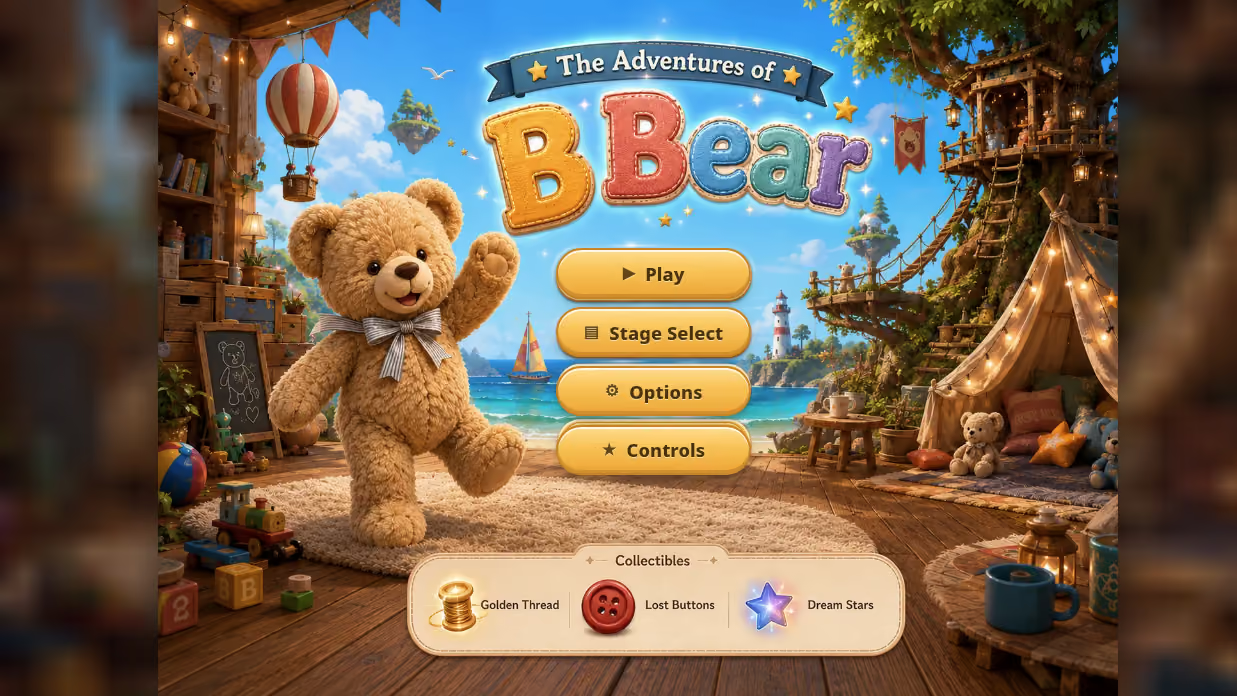
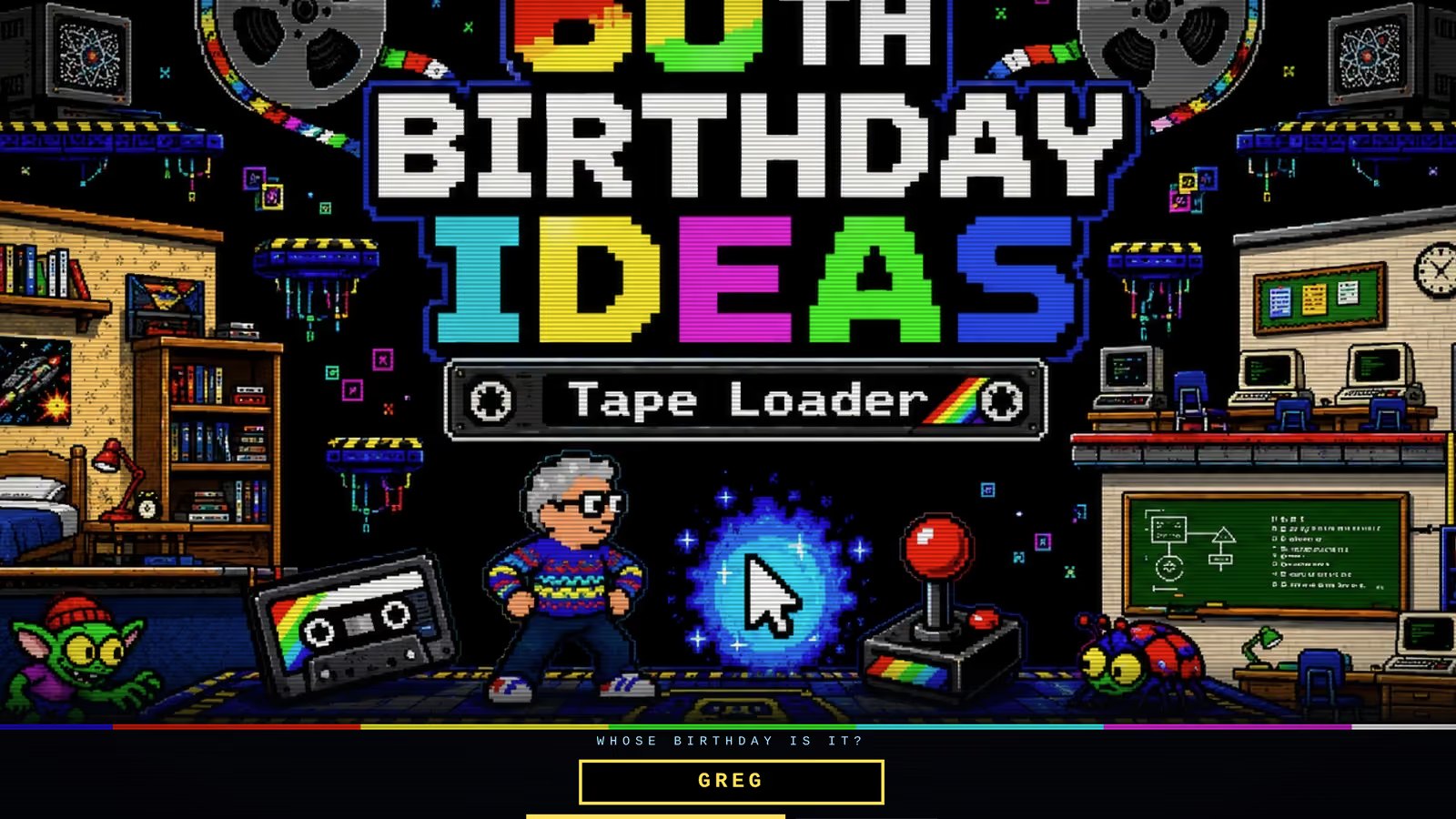
That changes the design target completely. The question stops being "is this fun on a second run" and becomes "is this good to watch somebody else discover". Those want different things: the second wants a short route to the recognisable bit, a title screen that makes the premise obvious in one glance, and no long preamble in the way.
It also argues for casting broadly. Every additional real person in the game is another household where somebody will say that sentence. A ten-character roster where all ten are actual friends is not ten times the artwork for a marginal gain; it is ten separate reasons for the game to be opened by someone else.
Things they did not see
Content that cannot all be seen in one run gives a reason to return that costs no extra playing time on the first run.
Optional collectibles somebody did not find. Background detail that rewards looking. A character who only appears if you take a particular route. A different ending for a full completion.
The important property is that none of these delay anybody. A player who wants to finish, finishes. The extra exists for the person who wants more, and it is invisible to the person who does not. That is the opposite of making the game longer, which taxes everybody, and it is why length and replayability are different conversations, as set out in how long a custom game should take to finish.
Difficulty as replay
One more, easily overlooked: a game that can be played again harder.
The same levels at a shorter forgiveness window and a limited number of lives is a genuinely different experience of the same content. It costs nothing to produce, because it is the same build with different numbers, and it converts a completed game into an available challenge.
It also serves the household case. The child plays it gently; the adult plays the same game properly. Both are playing the game somebody made for them. That is the structure described in designing one game for a four year old and an adult.
What kills replay
Worth naming, because these are easy to add by accident.
Anything unskippable. A cutscene, an intro, a loading sequence. Delightful once, an obstacle the fourth time. Our loading screen offers a key to skip it for precisely this reason.
Length. Nobody replays a forty minute game.
A save that resumes. Excellent for finishing a long game, actively harmful for a short one, because it removes the fresh start. A game that should be replayed wants to offer a new game as prominently as a continue.
What this means for a commission
More people beats more levels. Every extra person in the game is another reason it gets opened.
A score is nearly free. If the game does not have an obvious one, ask.
And put the recognisable content near the front. Somebody showing the game to a visitor has about ninety seconds of their attention, and it should not be spent on a first level.