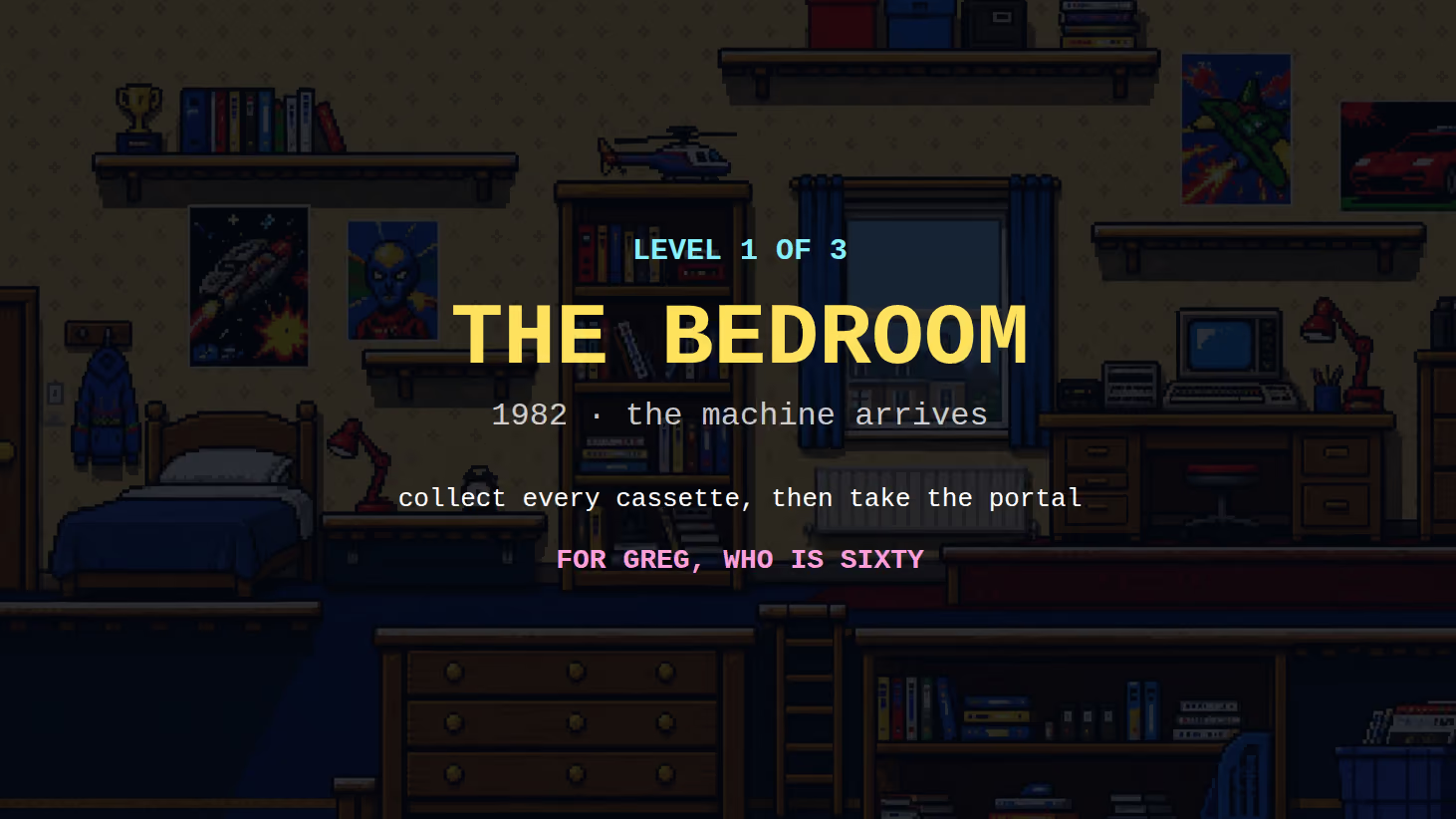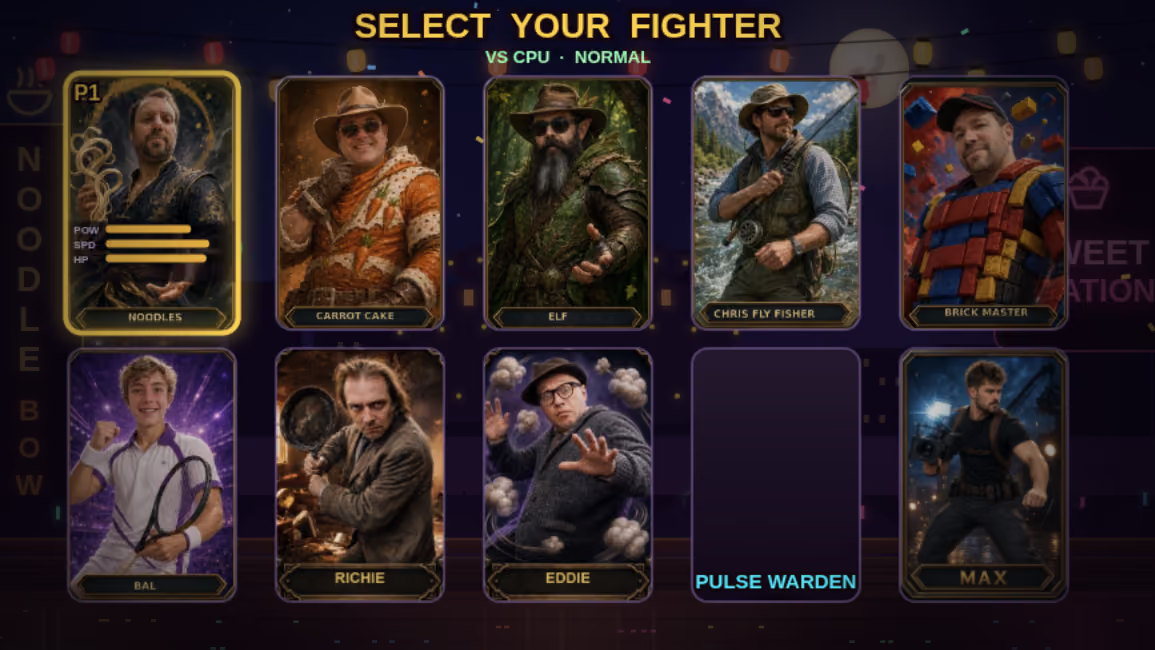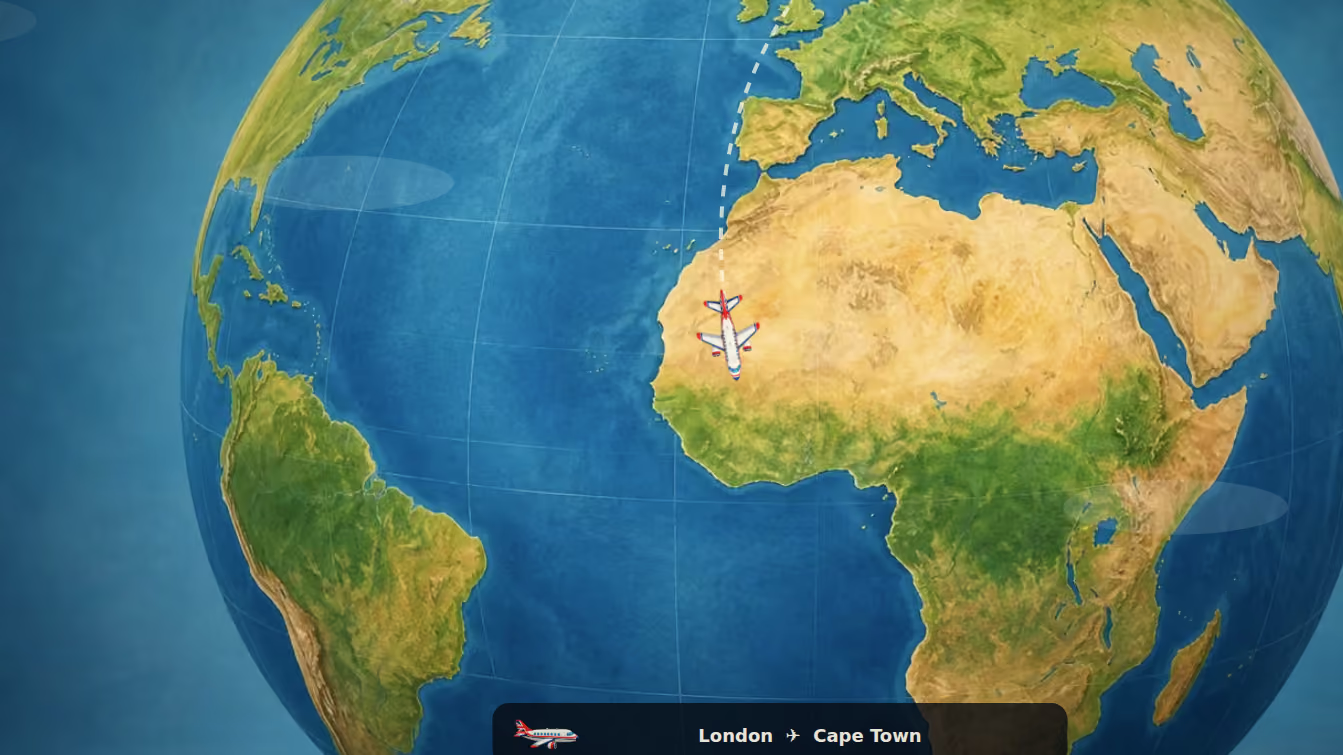
We have built games in both. One is 104 kilobytes of pixel art. Another is twenty megabytes of painting. The gap between those two numbers is almost entirely a style decision, and it changed everything downstream of it.
This is the comparison as it actually plays out in a commission, rather than as an aesthetic preference.
They are different disciplines
Worth saying first, because people assume pixel art is the easy one.
Pixel art is drawn small, often a character no more than sixty pixels tall, with every pixel placed on purpose. It is then displayed enlarged with smoothing switched off, so the pixels stay hard-edged squares rather than blurring. Our platformer sets exactly that flag on its canvas.
The skill is in what to leave out. A face at that size is a handful of marks, and choosing which handful is the entire job. Bad pixel art does not look charmingly simple, it looks like a mistake, and the line between the two is narrow.
Painted art is drawn at or above the size it will appear, with soft edges, blending and as much detail as the artist wants to put in. The skill is more familiar and the failure modes are gentler; a mediocre painting is still recognisably a painting.
Neither is the cheap option in general. Which is cheaper depends entirely on what the game needs.
What each one costs
Pixel art scales with the number of distinct things. A character, a few poses, a set of tiles, some props. Once those exist, more level is nearly free, because a level is a rearrangement of things that already exist. File size is trivial: an entire game of it fits in a hundred kilobytes.
Painted art scales with the number of distinct scenes. Each new location is a new painting, and a painting cannot be assembled from parts of other paintings without looking like it was. Our adventure has hundreds of illustrations, and that is the honest reason it is twenty megabytes rather than one.
So the shape of the game decides which is cheaper. A platformer that revisits the same kinds of space is cheap in pixels and expensive in paint. A journey that visits thirty distinct places is the reverse, and the full arithmetic is in why one game is 104KB and another is 20MB.

What each one says
Style is not neutral. It arrives carrying a reference whether you intended one or not.
Pixel art says a specific era, and for a great many people it says their childhood. That is enormously powerful when the game is a sixtieth birthday present for someone who had a home computer in 1982, because the style is doing half the emotional work before the content starts. Our Tape Loader build leans on this deliberately: the loading screen with its climbing byte counter is a memory, not a mechanic.
It is a liability when the occasion has nothing to do with that era. Pixel art for a christening reads as a stylistic choice made for the person building it rather than the person receiving it.
Painted art carries much less baggage and is therefore the safer default. It says "somebody made this by hand for you", which is close to universally the right message for a gift. It is what our adventure uses, and what most of our commissions use.
Likeness
If the point is that somebody recognises themselves, this is often the deciding factor.
Painted art holds a detailed likeness comfortably. Pixel art holds a likeness through silhouette and one or two signature details, which is covered in how a photograph becomes a character.
That works beautifully for a person with a distinctive shape: particular hair, a jumper they always wear, a build that reads instantly. It works less well for someone whose recognisability lives in their face, and it is worth being honest about that at the brief stage rather than after the artwork exists.
Mixing them
Games mix styles constantly and it works when it is structured rather than accidental.
The usual structure is that the world is one style and the framing is another: a pixel-art game with a painted title screen, or a painted game with a crisp graphic interface. That reads as deliberate because the two styles occupy clearly different roles.
What does not work is mixing within a single scene, where a painted character in a pixel world simply looks like a mistake. The eye is extremely good at detecting a different edge treatment and immediately reads it as something that does not belong.
What this means for a commission
Let the occasion choose, not the taste. If the recipient's memory is of a particular era, pixel art is doing work no other style can. If not, painted almost always lands better.
Ask what the game is shaped like. Many rooms, few mechanics, painted. Many mechanics, repeated spaces, pixels.
And the style decision comes before the palette. Which comes before the artwork, which comes after the level layout, which comes after the movement. The whole ordering is in why game artwork gets drawn twice and it is not a chain you can enter in the middle.
Both styles are represented in the arcade. They are unmistakably from the same studio and unmistakably different things.