Both put somebody they know into a story. Both are sold as the personal alternative to a generic gift. They are genuinely different objects and they suit different people, and we will happily tell you when the book is the better choice.
The structural difference
A book is read. Usually to somebody, by somebody. The recipient is an audience, which is exactly right for a very young child and exactly the thing an adult may find slightly odd.
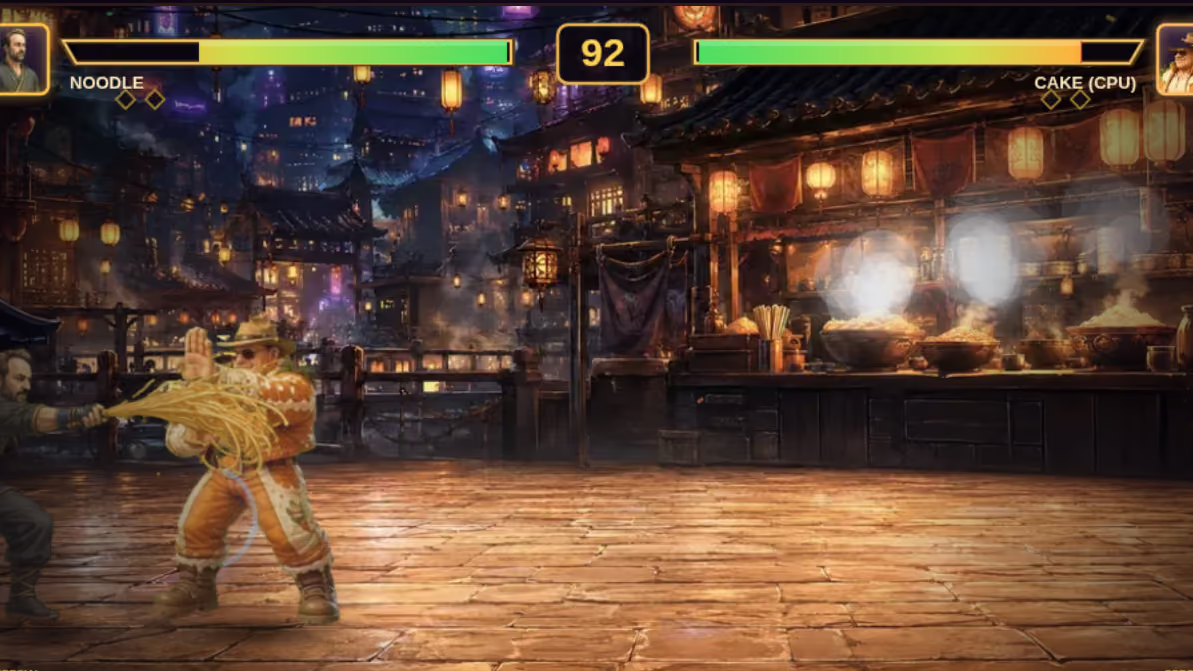
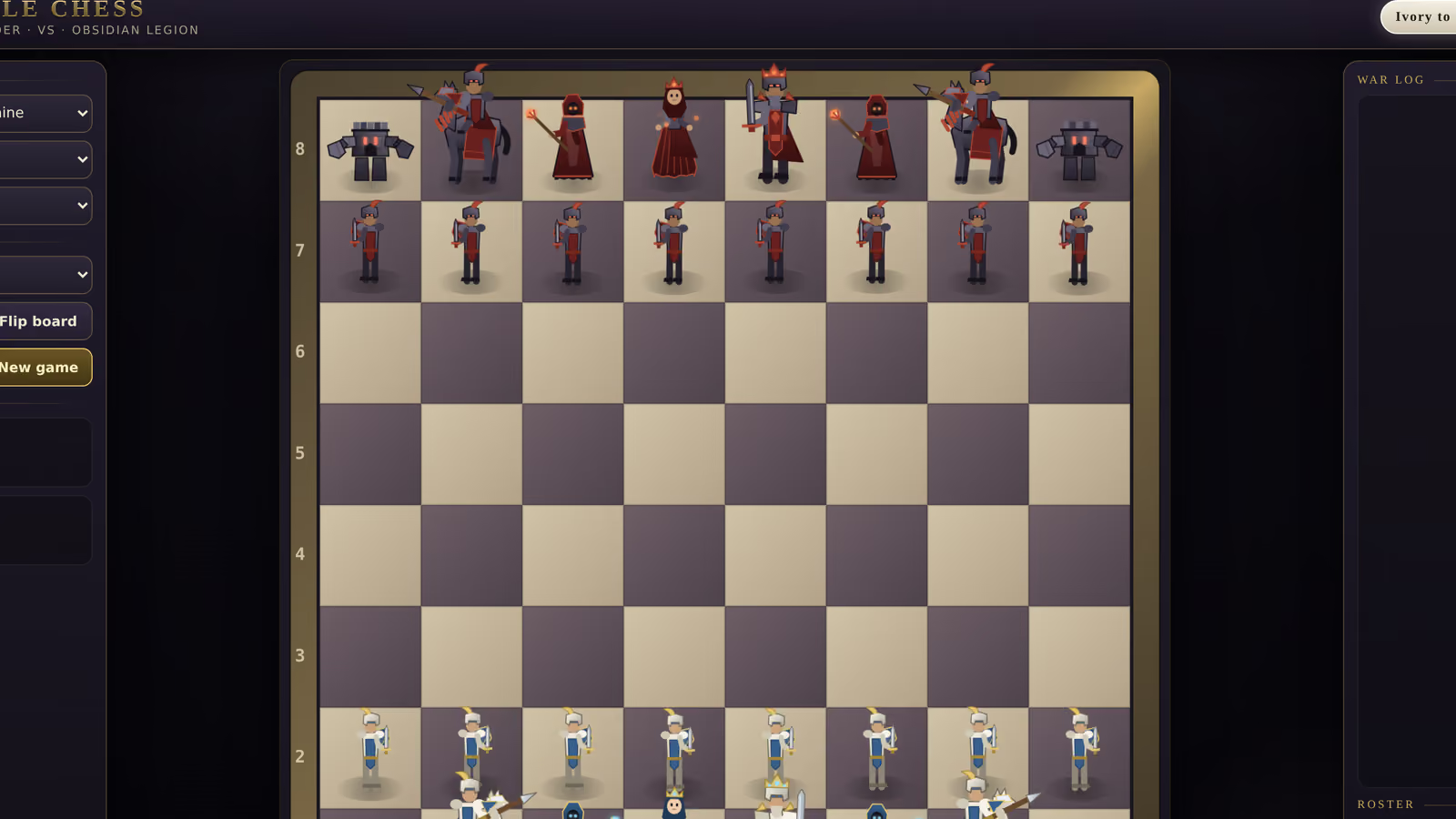
A game is played. The recipient acts, decides, fails and tries again. That requires coordination and a minimum age, and it gives them agency rather than a role in somebody else's telling.
Most of the rest follows from that one difference.
Where a book wins
Very young children. Below about four, a game asks for motor control that is not reliably there, and being read to is developmentally the point. A book is the correct answer and it is not close.
Bedtime. A book is a bedtime object. A game before sleep is the opposite of what most parents want.
Something physical to keep. A book sits on a shelf, gets handled, gets worn. That is a genuine advantage for a keepsake and a game does not have an equivalent.
Budget. A personalised book from an established template is considerably cheaper, and the reason is worth understanding rather than treating as a value judgement: the illustrations already exist. What changes between one copy and the next is a name, sometimes a hair colour, sometimes a face dropped into a pre-drawn scene.
That is a legitimate product and it delivers something real. It is customisation of an existing thing rather than something made about a person, which is the distinction drawn in milestone birthday gift ideas for women.
Multiple children. Several books is straightforward. Several games is several commissions.
Where a game wins
Agency. The recipient does something rather than watching. For a child of five upwards, being able to control a character who looks like them is a different experience from being shown one.
Adults. Personalised books for adults tend to read as a novelty, because the format carries a strong association with children. A game does not have that problem: adults play games. A commissioned game for a fortieth is an unusual object, not a joke.
Groups. A book has a protagonist and a supporting cast. A game can have ten characters who are all real people, and each one is a household where it gets opened. That is the strongest argument for a game as a group gift, and it is set out in what makes somebody open a game twice.
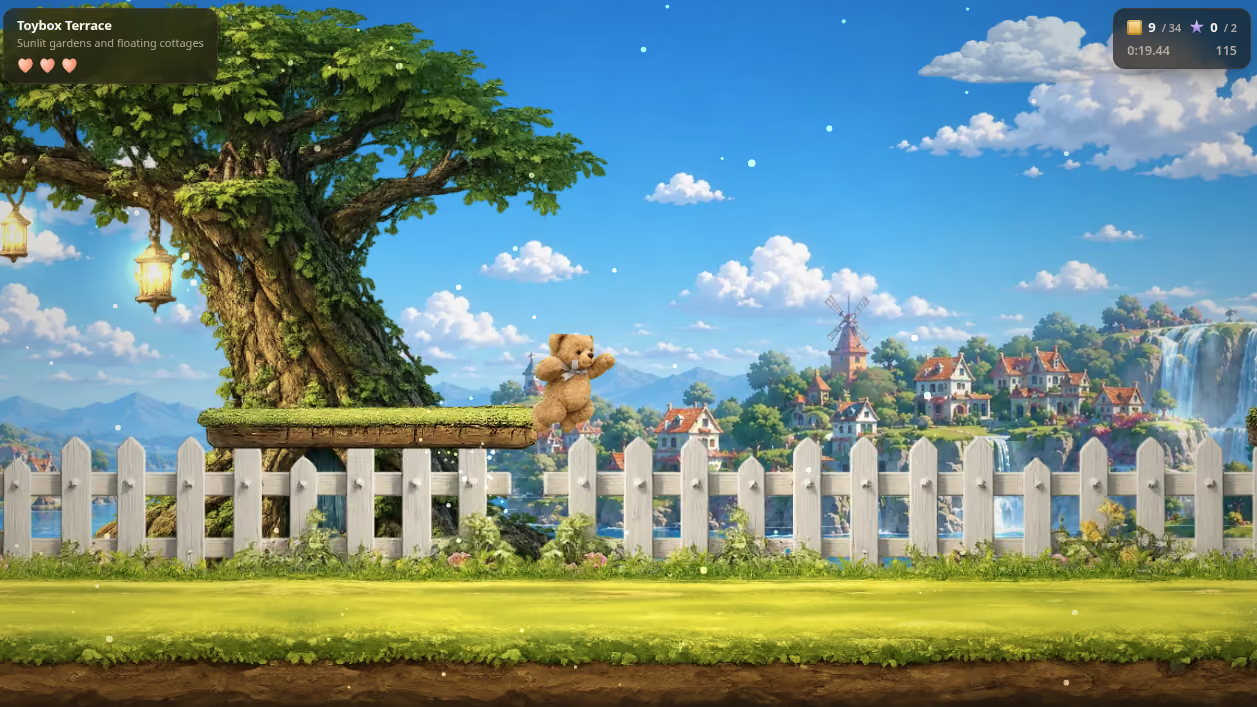
Specificity. This is the real difference. A template book puts your child into a pre-drawn world. A commission paints your actual street, your actual caravan, your actual dog. Nothing in it existed before your brief.
Sharing. A game is a link. Everybody in it can have it, immediately, wherever they are.

Cost, honestly
A personalised book is typically in the range of a decent hardback. Our commissions start at £99 for a single level, £349 for a multi-level build with a cast, and £1,200 for a full production.
The gap is not margin, it is what is being made. A template book is an existing product with fields swapped. A commission is artwork produced from your photographs, levels laid out for it, and a build assembled and tested. What drives that cost is described in how much does a custom video game cost.
If the budget is the deciding factor, a good personalised book is a better gift than a commission you cannot afford, and we would rather say that than sell you something uncomfortable.
Which for which age
A rough guide rather than a rule.
Under four. Book.
Four to seven. Either, and a game works if it is built gently: no way to lose, forgiving controls, short. That is a deliberate setting, described in designing one game for a four year old and an adult.
Seven to twelve. Game, usually. This is the age where being in a game is most exciting and being read to has stopped being it.
Teenagers. Game, and it must be about their friends rather than about them being young. A personalised book at this age reads as being handled as a child, which is covered in 16th birthday gift ideas.
Adults. Game, or neither. An adult personalised book is a hard sell outside a few specific formats.
Older adults. Depends entirely on the person. Something short and gentle to be shown to visitors works well; a book works too, and format questions like eyesight and handling matter more than the medium, which is discussed in 90th birthday gift ideas.
The both answer
For a family with a wide age range, both is frequently the sensible outcome rather than a fudge.
A book for the three-year-old, who wants to be read to. A game for the seven and ten-year-olds and the adults, with the three-year-old in it as a character even though they will not play it.
That covers everybody at their own level and it costs less than commissioning separately for each.
What this means
Under four, buy the book. Genuinely.
For adults and for groups, a game does something a book cannot.
And if the budget is tight, a good book beats a strained commission. We would rather tell you that now.