Sixteen is the age at which a gift is properly assessed. Younger children are delighted by most things and adults are polite about all of them. A sixteen-year-old will be gracious to your face and will know within two seconds whether you have paid attention.
That is not ingratitude. It is that at sixteen the gap between who somebody is and who the adults around them think they are is at its widest, and a present is a very direct measurement of it.
The mistake is timing, not taste
The classic wrong gift at sixteen is not boring. It is out of date by about two years.
Interests move fast at that age. The thing they were obsessed with at fourteen may now be slightly embarrassing to them, and receiving a large gift built around it is a small public statement that you have not noticed they moved on.
The fix is intelligence gathering, and the source is not the birthday person. Ask a sibling. Ask their closest friend. Ask the parent who has been listening. A sixteen-year-old asked directly what they want will say "anything, honestly", and will have told a friend precisely what they want three weeks ago.
What actually lands
Anything connected to new independence. Sixteen is when the world starts opening: travel on their own, a first job, a first proper phone contract, possibly the start of driving lessons. Gifts attached to that expansion read as being treated as an adult, which is worth more than the object.
Things for the interest they have now, at a level above what they own. If they have taught themselves something, the gift is the better version of the tool. Better headphones. A proper stand for the thing they set up in their room. The next step up rather than the entry level, because they already have the entry level.
Anything about their friends. Same principle as a 21st, earlier. The friendship group at sixteen is the centre of the world and everyone in it knows, at some level, that it will not survive sixth form and university intact.
Money, honestly. Sixteen-year-olds want money and have specific plans for it. Where it fails is as the entire gift from somebody close.
What to avoid
Anything with sixteen on it. Keys, badges, balloons in the shape of the number. Fine as party decoration, poor as a present.
Clothes, unless you have been explicitly briefed. The hit rate is low and the miss is memorable.
Anything that reads as an educational intervention. A revision guide is not a birthday present. Neither is a self-improvement book, however good.
Something for the whole family that is nominally theirs. A board game, a games console the household will share. They know.

The personalisation trap
Personalised gifts are risky at this age for a specific reason: most of what is sold as personalised is aimed much younger, and receiving it feels like being handled as a child.
The distinction that matters is what the personalisation is about.
A gift personalised with their name and age is about them being sixteen, which is the one thing they do not need pointing out.
A gift personalised with their actual world, their friends, the running joke, the band, the game they have put four hundred hours into, is about their taste. That is a completely different message and it is received completely differently.
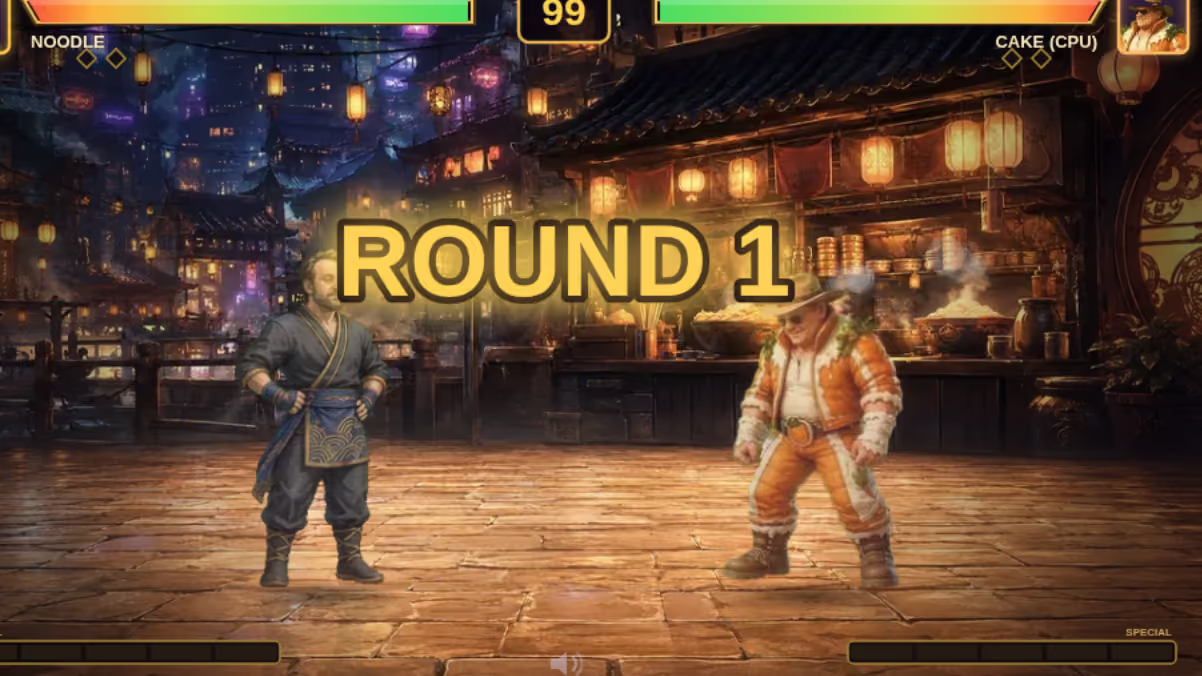
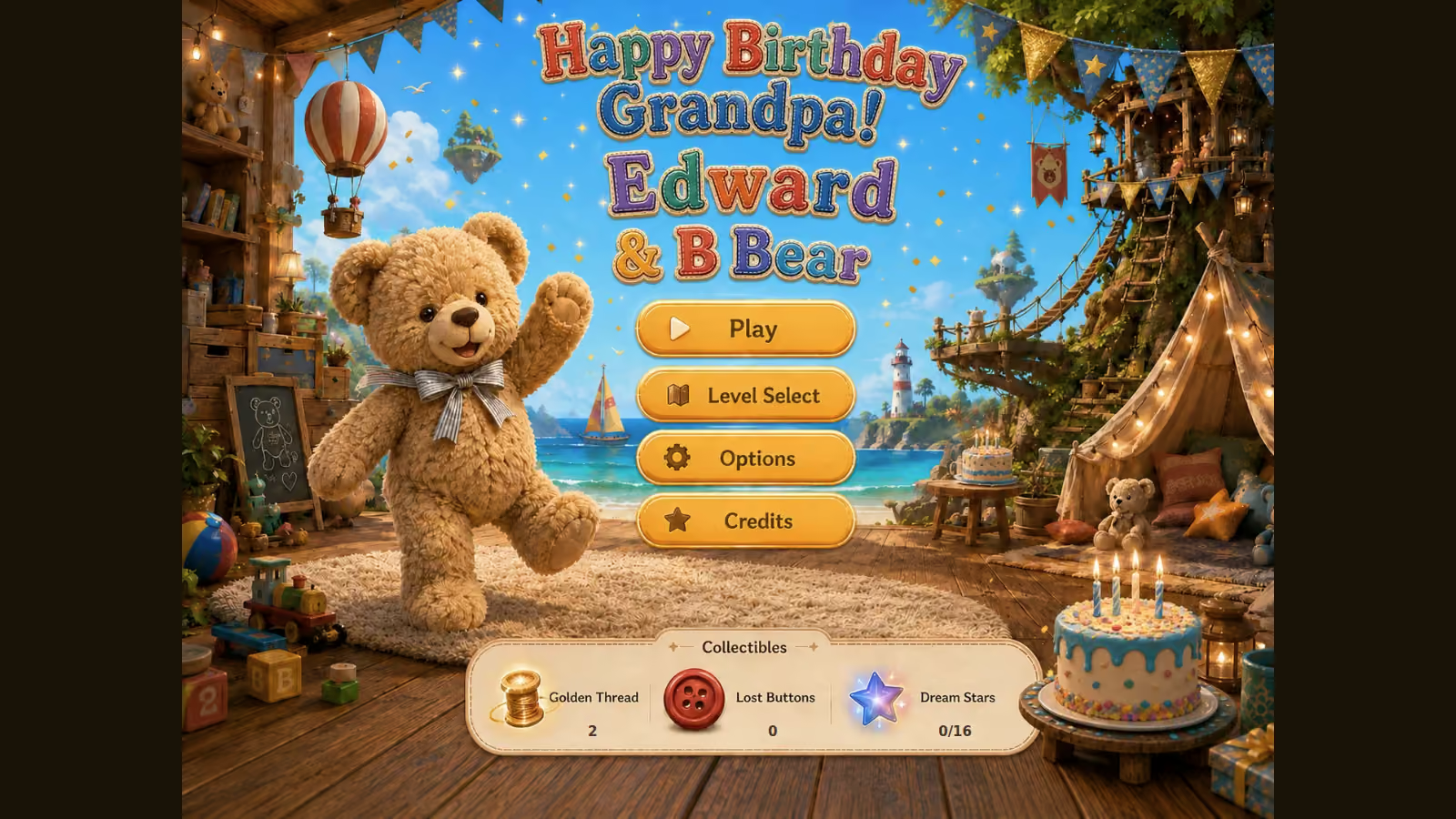
A commissioned game is on the right side of that line when it is built around the second thing. A single-level build starting at £99 with their friends as characters and their own references in it is not a children's gift. Built around the fact that it is their sixteenth, it is. Same product, opposite outcome, and the difference is entirely the brief.
If they only play games
For a significant number of sixteen-year-olds the honest answer to what they are into is games, and adults tend to treat that as a phase to be worked around rather than an interest to buy for.
It is an interest like any other, with depth to it and things worth having at a higher level. Better peripherals, a proper chair, the specific edition of something they follow. Or a game that is genuinely about them and their friends rather than one more thing off a shelf.
There is more on that in gifts for a teenager who only plays games, and the case for building around a friendship group is in a fighting game starring your friend group.
What this means
Ask somebody their own age what to get. It is the single highest-value thing you can do.
Buy for now, not for the version of them you remember.
And if you personalise it, personalise the taste rather than the birthday.