You have commissioned something. It arrives as a file and a link. Now it has to be given to somebody, in a room, in a way that feels like a present rather than like being sent a URL.
This is the part people put no thought into and it decides a surprising amount of how the gift lands.
The problem with a link
A link has no weight. There is nothing to hand over, nothing to unwrap, nothing to hold.
Handing somebody a phone with a webpage open is functionally correct and emotionally flat, and it puts the recipient in the awkward position of having to react to something they have not understood yet.
The fix is to give them something physical that points at the thing.
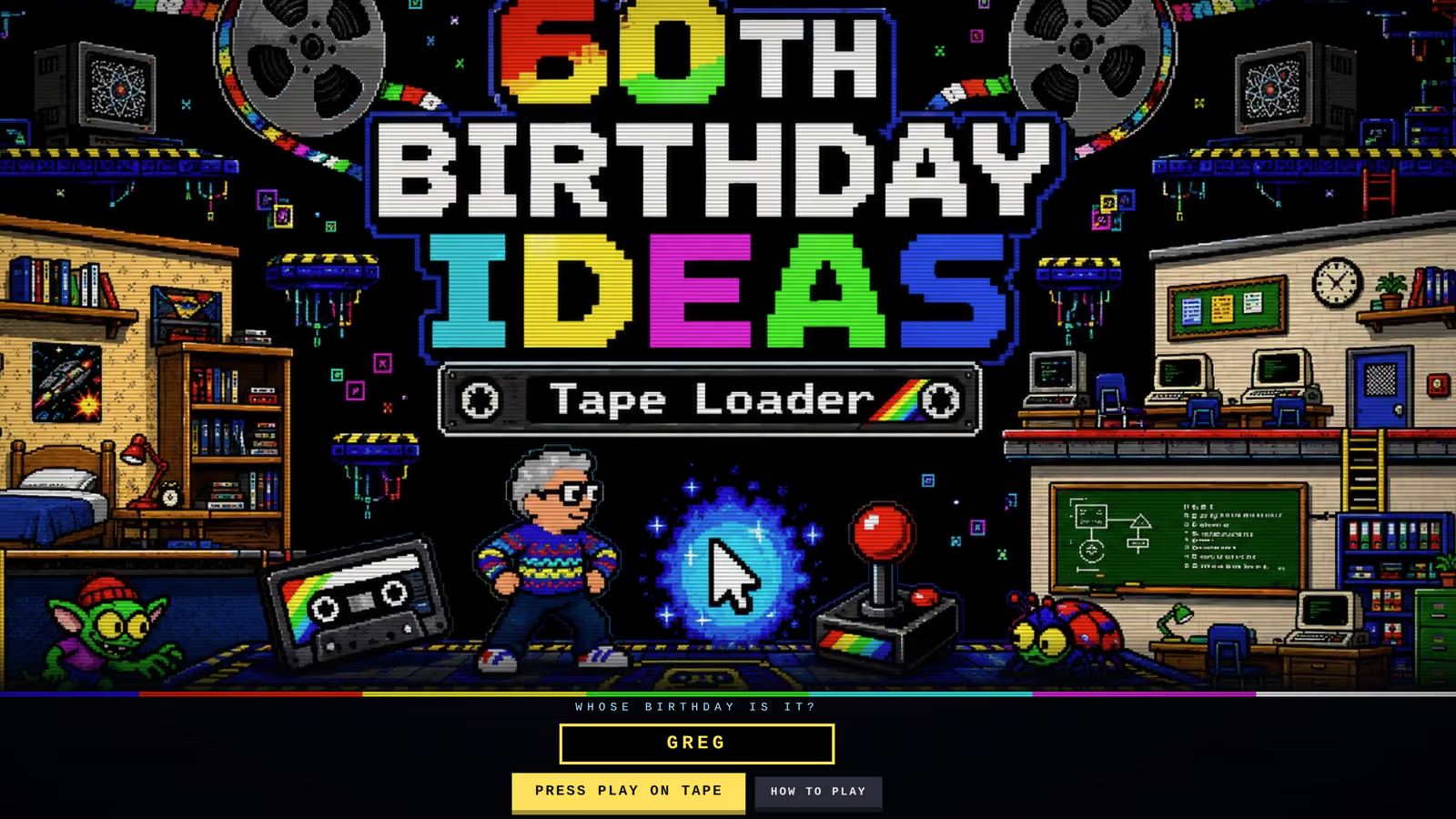
A printed card with the title screen on it. This is the best version and it is close to trivial. A good print of the title screen, with their name on it as it appears in the game, in an envelope. They open a card, see a picture of themselves in a game, and then they play it.
A framed still. For a larger occasion, a properly printed scene from the game, framed. It becomes the object and the game becomes the thing the object leads to.
A QR code on something. Slightly less charming and very practical, especially if several people will want to open it.
Ask us for the stills; they exist as part of the build and it costs nothing to send them to you.
Set it up beforehand
The single most useful practical step, and it matters most for the people the gift is most likely to be for.
Before the day, on whatever device it will be shown on: open it, check it works, check the sound, leave it ready. Then the moment is pressing play rather than typing an address, finding the email, apologising for the signal, and waiting for a twenty megabyte file to arrive on the venue's guest wifi.
If it is for an older relative, do this on their own device and leave it somewhere obvious. A gift that requires them to find an email later is a gift they may never open a second time.
Download the file as well as keeping the link. A downloaded build works with no internet at all, which removes the most common failure at a venue.

Pick the moment
There is a good window at almost every gathering and it is narrower than people think.
Not on arrival. People are still coming in, coats are being taken, nobody has settled.
After the meal is usually right. Everybody is in one place, sitting down, and attention is available.
Not late. Once the room is loud and drinks have been flowing for three hours, a game on a screen cannot compete and the recipient will not remember it clearly.
If there are speeches, immediately after them is excellent, because the room is already looking in one direction.
Let them play, with help beside them
The main way this goes wrong is a person who does not play games being handed the controls in front of twenty people and struggling.
Two things prevent it.
Somebody sits next to them who already knows how it works. Not doing it for them. Beside them, quietly, so any hesitation lasts two seconds rather than thirty.
Somebody has played it through beforehand. So there are no surprises and no fumbling for what to do at the level card.
If the recipient is very young or very old, the honest answer may be that a grandchild plays and they watch. That is a completely legitimate way to receive it, and it is why we build these to be short and gentle when we know that is the context. The reasoning is in does a game need a way to lose.
Choose the screen
Bigger is better for a group, but portable matters more.
A tablet is usually the sweet spot: big enough for several people to see, light enough to hand around.
A laptop plugged into a television is the best option if the room is watching, and worth arranging in advance rather than discovering the cable is wrong.
A phone works for one person and not for a group. Fine if the gift is being given privately.
Check the sound. A game with generated audio on a device with the volume down is missing half of itself, and the sound in these builds is doing real work, as described in how a game makes sound without any sound files.
Afterwards
Two things worth doing on the day.
Send it to everybody who is in it. Immediately, in a group message. Every person painted into the game has a reason to open it, and that is when the gift becomes a shared thing rather than a single moment. It is the pattern described in what makes somebody open a game twice.
Save the file somewhere that is backed up. Wherever the family photographs live. The build needs no server and no account, which means the only real failure mode is losing the file, as set out in who owns the game when it is finished.
What this means
Give something physical that points at it. A printed card is enough.
Set it up before the day, on the device it will be shown on.
After the meal, with somebody sitting beside them.
And send it round the group afterwards. That is when it stops being a present and becomes a thing the family has.