A child who has everything is not a spoiled child, usually. It is a child with several sets of grandparents, a birthday and Christmas four months apart, and a cupboard that has been filling up for six years.
Everything in that cupboard was wanted at the time. That is exactly the problem: another wanted thing joins a pile of previously wanted things and is indistinguishable from them by February.
What children actually remember
Ask an adult about presents from childhood and you get a very short list, and it is almost never the expensive items.
It is the bike, because of what it allowed. It is the one particular soft toy, because it became a companion rather than a possession. It is the day out with a specific person. It is the thing that had their name in it.
What does not survive is the good toy. Not because it was bad, but because a toy competes with every other toy and memory only keeps the ones that were different in kind.
So the useful question is not what to buy but what category to buy in, and there are three that work.
One: things that are about them specifically
Young children have a strong and slightly startling reaction to being inside something. A story where they are the main character, a picture with them in it, a game where the hero has their name.
The reaction fades with age, which is why this works so much better at five than at fifteen. Around ten it starts becoming embarrassing, and by thirteen the personalisation has to be about their friends rather than about them, which is the shift covered in 16th birthday gift ideas.
For a child under about ten, though, this is close to unbeatable, and it is one of the few gifts that does not compete with the toy cupboard because there is nothing else in it of the same kind.
Two: things that involve an adult
A great deal of what children want is attention from a specific person, and presents are a socially acceptable way of getting it.
Which means a gift that comes with a person attached outperforms a better gift that does not. The day out. The thing you build together. The activity you do every week for a term.
This is also the answer when the cupboard is full and the parents have politely asked for no more objects. It has no footprint and it is what the child would choose if asked properly.
Three: things that do one thing extremely well
If it has to be an object, the ones that survive are the ones that are not competing.
Not another toy, but the first proper version of something: a real magnifying glass rather than a toy one, a real set of tools, a proper camera, an instrument. Children can tell the difference between a toy version of a thing and the actual thing, and being trusted with the actual thing is most of the appeal.

The toy they already love
There is one specific version of this that works better than anything else we build, and it is worth calling out.
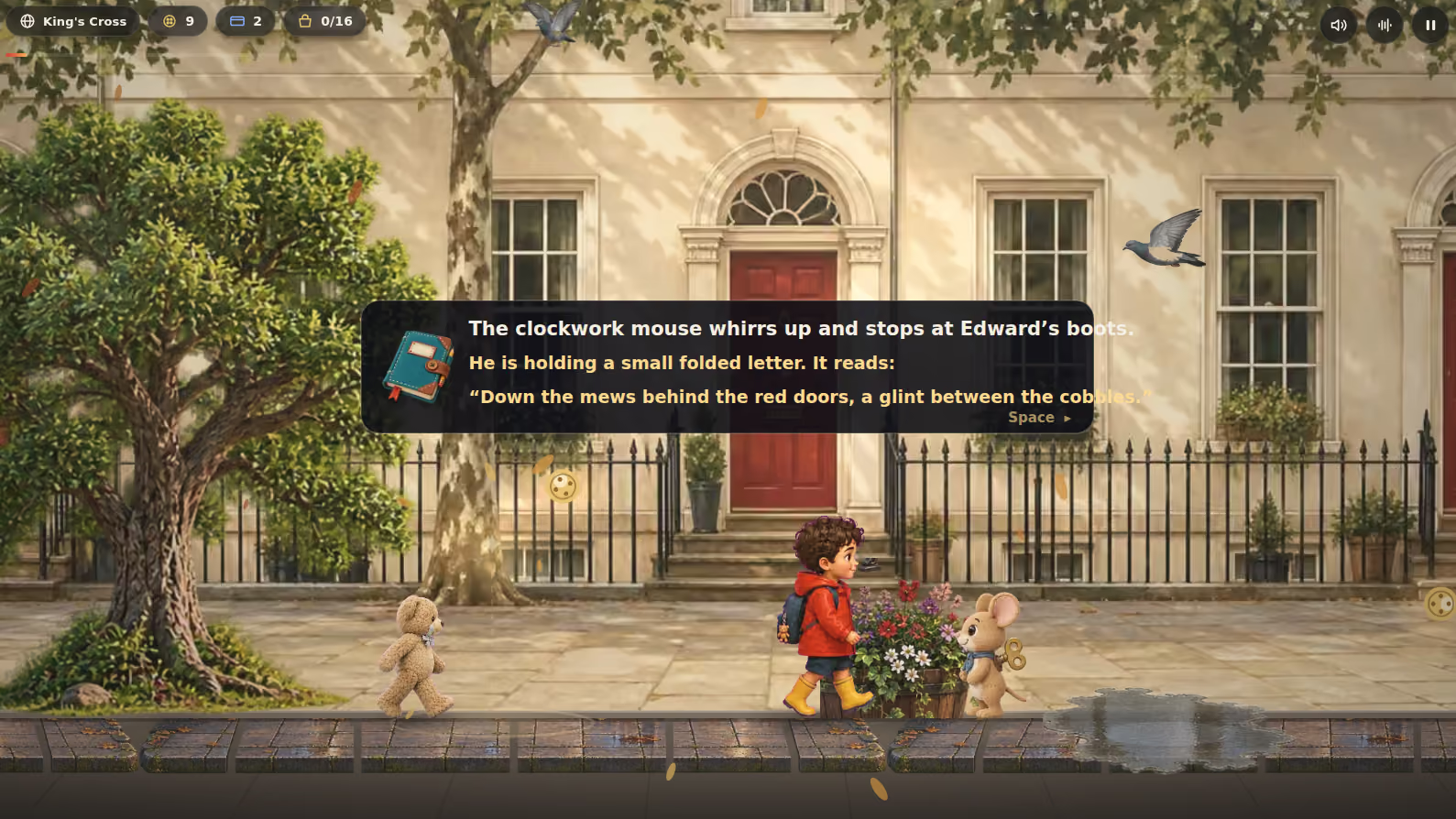
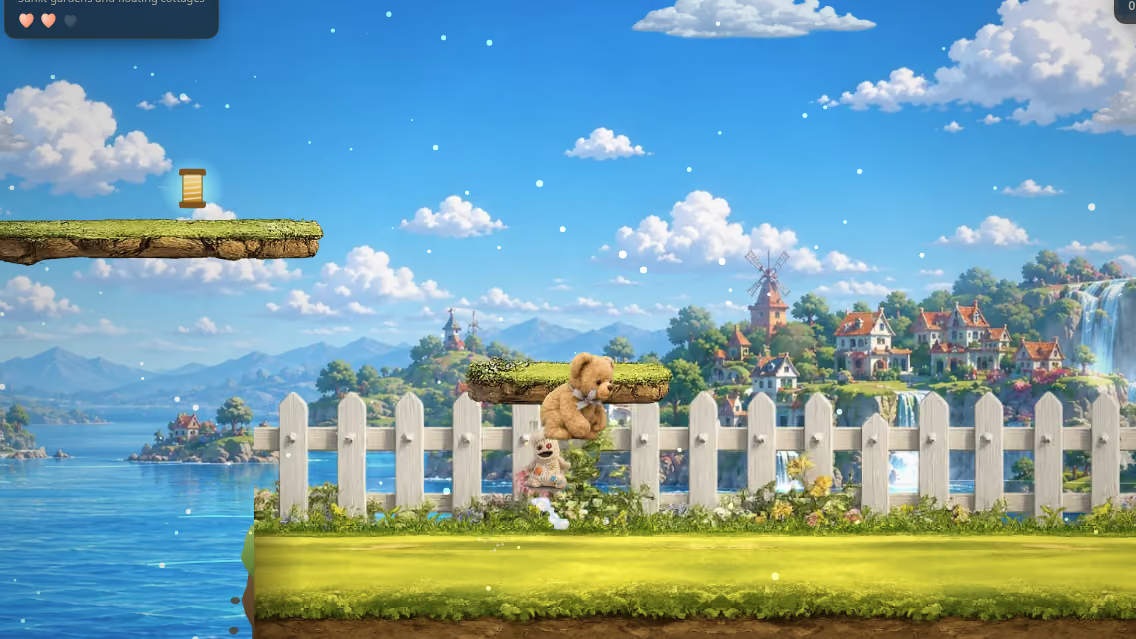
Rather than putting the child into a game, put their toy in it.
A child's recognition of their own bear is instant and total, in a way that recognising a drawing of themselves often is not. Children are used to seeing pictures of themselves and are frequently unimpressed by them. They have never once seen their bear somewhere it does not belong.
Doing it properly means keeping the wear: the resewn ear, the missing eye, the bald patch. That is what makes it theirs rather than a bear, and the reasoning is in turning a real teddy into a playable character.
A single-level build starting at £99 is enough for this. It does not need to be long; it needs to have the bear in it in the first ten seconds.
What to avoid
Another toy in a category they already have. However much better it is.
Anything requiring the parents to manage it. A pet, a subscription, something with small parts that live under furniture.
Anything educational disguised as fun. Children detect this immediately and resent it slightly.
Something aimed at the age above. Buying up feels generous and mostly produces a thing that sits unused for a year.
What this means
Buy a different kind of thing, not a better version of the same thing.
Personalise the toy rather than the child, for anyone under ten.
And if in doubt, buy the day out. Nobody has ever forgotten one of those.
More on the specific case of building around a toy is in turn your child's teddy into a video game, and on designing something a young child can genuinely play in one game for a four year old and an adult.