"Hard to buy for" is used for four completely different problems, and the reason it feels intractable is that people try to solve all four with the same approach.
Work out which one you are facing and the answer becomes considerably clearer.
One: they can buy anything they want
The person with the means and the inclination to purchase whatever they fancy. Nothing you buy will be better than what they would choose, and they will already have it.
The answer is not to spend more. It is to leave the category of purchasable things entirely.
Their own history. Photographs restored. The street they grew up on, drawn properly. A record from the year they were born. None of this is available to them at any price, because it requires somebody who knows them to have gone and found it.
Time with you, arranged. Not a voucher, which is admin. A day, booked, with the logistics handled.
Something made about them. Which is the entire premise of a commission and the reason it works for this specific person: it cannot be bought, cannot be duplicated, and would be worthless to anyone else.
Two: they genuinely want nothing
Different problem. This is somebody actively trying to have fewer possessions, and it is common from about seventy onwards and increasingly common at any age.
Take them seriously about objects. Ignore them about attention.
Almost nobody saying "please do not get me anything" means "please do not think about me". They mean do not spend money, do not add to the pile, do not create an obligation.
So: consumables, which disappear. Experiences, which have no footprint. Time, which is what they actually meant. Or something that replaces rather than adds, like a better photograph in a frame they already own.
More on this specific version in 80th birthday gift ideas.
Three: you do not know them well enough
Very common and rarely admitted. A colleague, a partner's parent, a new in-law, somebody you see twice a year.
There is one answer and it takes thirty seconds: ask somebody who does know them.
A sibling, a partner, somebody who sits near them. One message. "I want to get X something decent, what are they actually into?"
The barrier is a slight embarrassment about admitting you do not know, and swallowing that embarrassment is the entire difference between a guess and a gift. Nobody has ever thought less of somebody for asking this question.

Four: they are difficult about presents
The person who is critical, who returns things, who has strong opinions and no hesitation about expressing them.
Two honest strategies.
Consumable. Something good, that gets used up. There is nothing to be disappointed by in a fortnight and nothing to store. Genuinely good food, drink or coffee is a completely respectable gift and the risk is bounded.
Ask them directly and buy exactly what they say. People in this category usually know precisely what they want and are frequently irritated that nobody asks. The surprise is worth less than the fit, for them, and pretending otherwise is a decision made for your own benefit.
What does not work is trying to prove them wrong with something clever.
The one thing that cuts across all four
Specificity.
Whatever the version of the problem, a gift that proves attention outperforms a gift that proves budget. That is true for the person who can buy anything, the person who wants nothing, the person you barely know once you have asked, and the difficult one.
A £15 gift that could only have been for them beats a £150 one that could have been for anybody. This is the single most reliable rule in gift buying and it is the same conclusion reached in milestone birthday gift ideas for men and milestone birthday gift ideas for women.
Why commissioning suits this problem
Being direct about why this is on our site, since we make them.
Something made about somebody sidesteps all four problems at once. It cannot be already owned, because it did not exist. It cannot be bought elsewhere. It has no footprint if it is digital. And it is very difficult to be difficult about something that took effort and is manifestly about you.
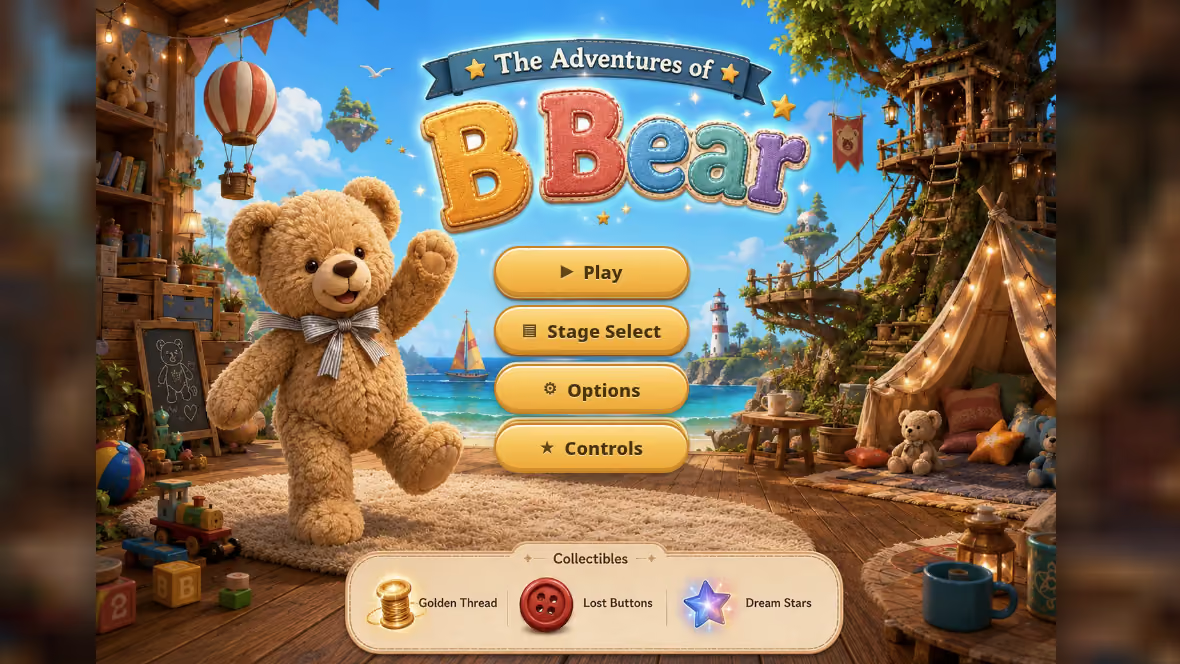
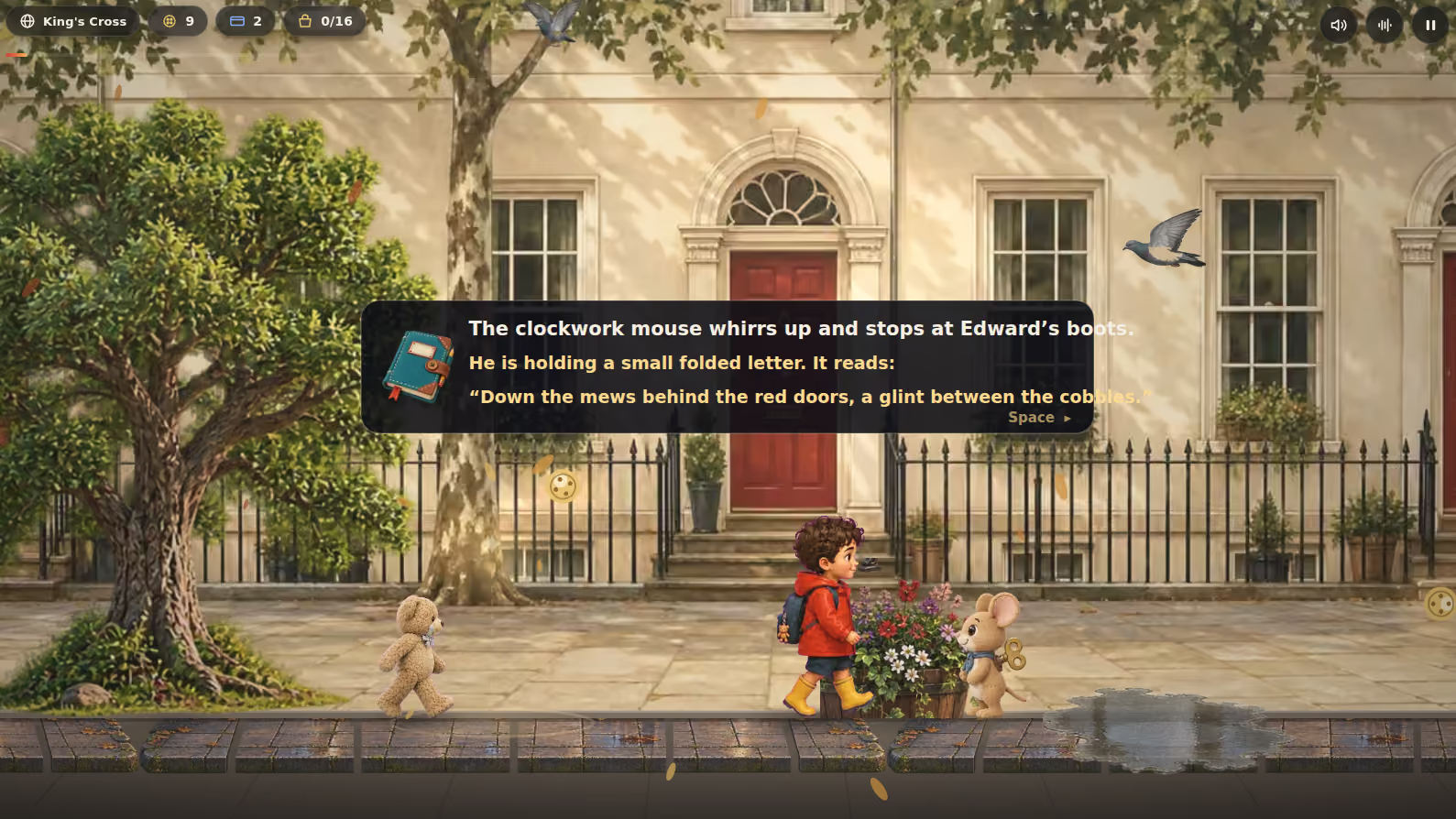
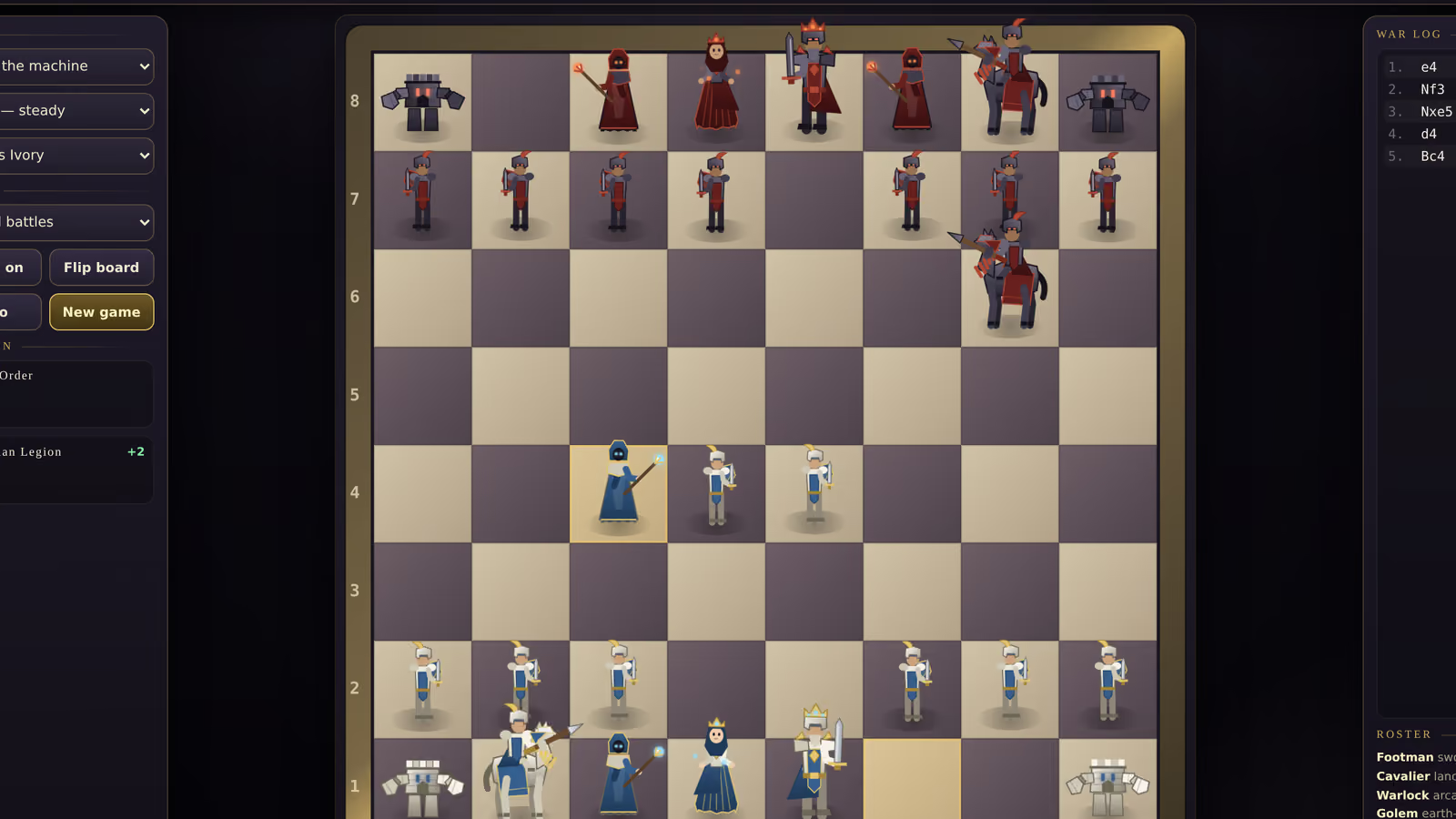
The brief is what makes it work rather than the budget, which is set out in how to write a brief for a custom game. A game about somebody's actual house, actual dog and actual running joke is a different object from a personalised one with their name on it.
Commissions start at £99 for a single level and £349 for a multi-level build with a cast.
It is not the answer for everybody. If somebody would find it baffling, it will baffle them, and we would rather say that than take an order. But for the person who has everything, it is one of the few remaining categories that they genuinely do not have.
What to avoid, in all four cases
Buying up in price to compensate for not knowing. It is visible.
A gift set. The bundled hamper of small items is the least personal option available.
Anything that requires them to do admin.
Guessing when asking was available.
What this means
Work out which of the four you have. The answers are different.
Ask somebody closer to them. For at least one of the four, that is the whole solution.
And specific beats expensive, in every one of them.