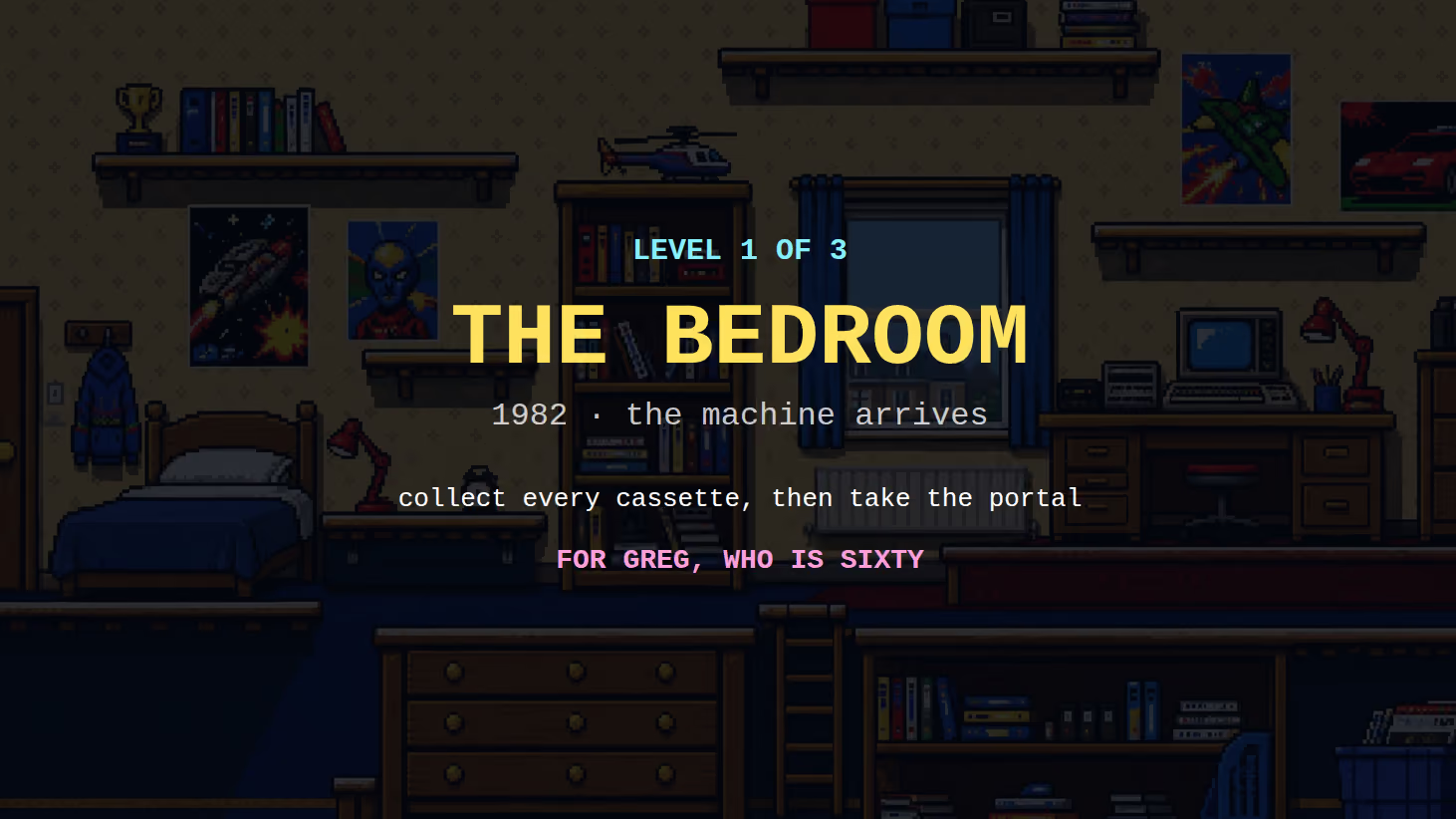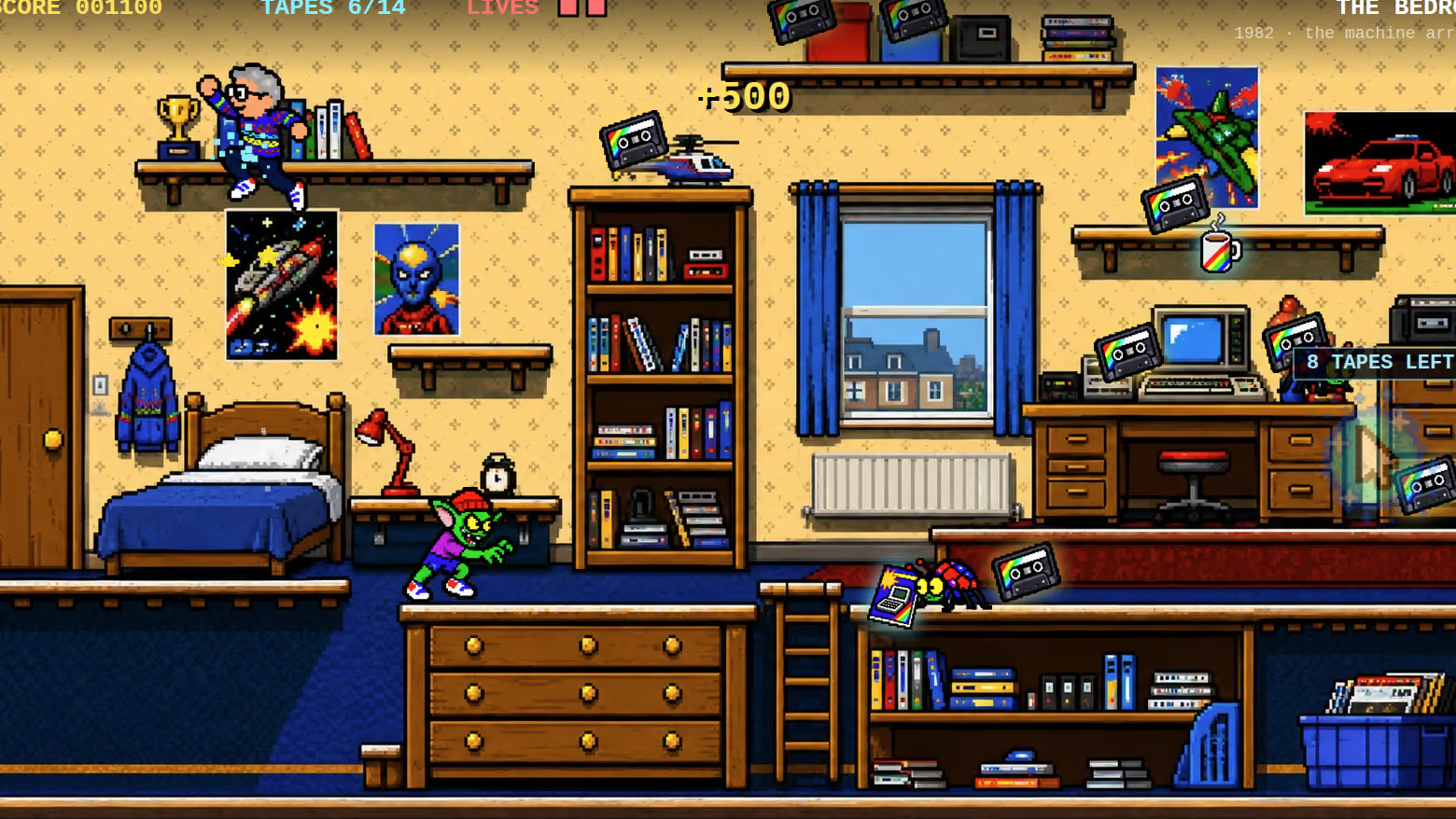
There are fourteen cassettes to collect in the first level of our sixtieth birthday game. Each one makes a sound when you pick it up.
Fourteen is roughly the number at which a completely identical sound starts to grate, which makes it a good case for talking about one of the smallest and most effective things in game audio.
Why exact repetition is wrong
Nothing in the physical world makes the same sound twice.
Drop the same coin on the same table a hundred times and every impact is different, because it lands on a slightly different edge, at a slightly different angle, on a slightly different part of the surface. The variation is small and completely involuntary and your ear has spent your whole life learning it.
A digital sound has none of that. Play the same generated tone or the same sample and it is identical to the sample, every time, forever.
The ear notices. Not consciously at first, but a sound that repeats exactly stops reading as an event and starts reading as a signal, in the specific sense of a machine beeping at you. And a machine beeping at you fourteen times in ninety seconds is an alarm.
This is repetition fatigue, and it is the reason people turn game sound off.
The cheapest fix: move the pitch
Multiply the frequency by a small random amount each time the sound plays. A few percent either side is enough, which is less than a semitone and well below the point where anyone would say the pitch had changed.
What it produces is a sound that is recognisably the same event and never bit-for-bit the same. Which is exactly what a real coin on a real table does.
The cost is one multiplication by a random number. There is very little in game development with that return on effort.
The same trick applies to timing. If two sounds fire together, offsetting one by a random handful of milliseconds stops them phasing into a single flat sound and keeps them reading as two things happening at once.
The second fix: give the sound a shape
The other approach is to make the sound interesting enough that repetition is tolerable, and this is the one our collection sound actually uses.
Picking up a cassette does not play one tone. It plays a note, then a higher note sixty milliseconds later. Two events with a rising interval between them.
That rise does something a single tone cannot: it reads as an upward gesture, a small piece of musical punctuation rather than a beep. Repetition of a gesture is much more tolerable than repetition of a tone, in the same way that a repeated word in a song is fine and a repeated bleep is not.
It also carries information. Rising means good. Our damage sound does the reverse, sliding from 300Hz down to 70, and nobody needs to be told which is which.

The third fix: variants
The traditional approach, and the one that costs actual money: record or generate three or four versions of the sound and pick one at random.
This is what larger productions do, and it is unambiguously the best-sounding option, because the variants can differ in ways pitch alone cannot. Different impact points, different surfaces, different intensities.
It is also the one that scales worst in a commission, because it multiplies the audio work by three or four for every sound in the game. For generated audio it is much cheaper than for recorded audio, since a variant is a few different numbers rather than a different recording session.
The reasonable middle ground for most builds is pitch variation on everything and variants only on the two or three sounds a player hears most.
Knowing which sounds need it
The rule is simply how often it plays.
A sound heard three times in a game needs nothing at all. A level-complete fanfare should be identical every time, because its job is to be recognisable and it is not heard often enough to tire.
A sound heard once or twice a minute is borderline and benefits from pitch variation.
A sound heard several times a second, footsteps being the classic, absolutely requires it, and footsteps are the sound most likely to make somebody mute a game.
The way to find out is to play the game for ten minutes rather than to test the sound in isolation. In isolation every sound is fine. This is the same reason a game has to be played to be finished rather than checked, which is the argument in proving a game is actually finished.
What this means for a commission
It is one of the cheapest quality differences available. A multiplication by a random number, applied to the right sounds.
Which sounds need it is decided by the level layout. Fourteen collectibles in a room is an audio decision as much as a design one, and those two conversations happen together.
And generated audio makes it nearly free. When a sound is a formula rather than a file, varying it is varying a number. That is one more consequence of the approach described in how a game makes sound without any sound files and how a game plays a tune with no music file.