The most honest research anybody can do on wedding favours is to walk round a reception hall at midnight and count what is still on the tables.
Sugared almonds. Small candles. Miniature bottles. Personalised trinkets with the couple's names and the date. A significant proportion of it is cleared away by staff, and none of it was cheap.
Why they get left
Three practical reasons, and they have nothing to do with rudeness.
Guests have no pockets and no bags. People at weddings are dressed for a wedding. There is nowhere to put a small glass jar, and asking somebody to carry one through an evening of dancing and a taxi is asking a lot.
It is not theirs, it is yours. A trinket with somebody else's names and date on it is a souvenir of an event, which is a category of object almost nobody wants in their home.
It is one of forty. For a guest attending several weddings a year, this is the fourth set of engraved coasters. The couple see it as personal to them; the guest sees a category.
Every favour that works avoids at least two of these.
What actually goes home
Food. Consistently the highest take-home rate of anything. Something eaten during the evening, or something obviously good enough to be worth carrying. Local, decent, and generous rather than token.
Something useful on the night. Flip-flops for dancing, a fan at a hot outdoor wedding, a warm blanket at a cold one, hangover supplies. These get used immediately, which means the favour has done its job before the question of carrying it home arises.
A drink. A miniature that people actually want to drink, rather than a decorative one they will not.
Something genuinely personal to the couple. Not personalised with names, personal in content: the family recipe, the seed from the garden, a small print of a place that means something with an explanation of why. The distinction between customised and made about you is the same one described in milestone birthday gift ideas for women, and it applies here exactly.
Nothing, plus a donation. Well received, entirely respectable, and the card is the gift. Write it properly rather than printing a stock sentence; a specific reason for a specific charity is worth reading.

The digital favour
There is a category that avoids the carrying problem entirely, which is a card with a link on it.
A card goes in a pocket. Nobody leaves a card on a table because it takes up no space and requires no decision. The take-home rate is close to total, which is the single biggest problem with physical favours solved.
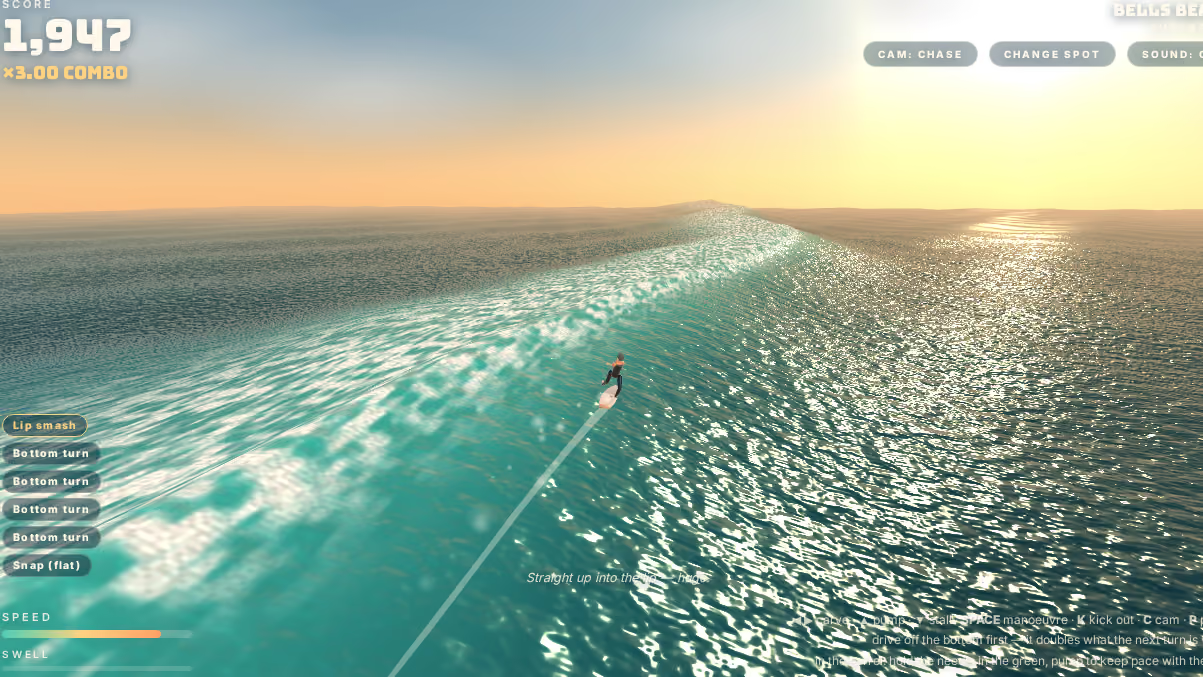
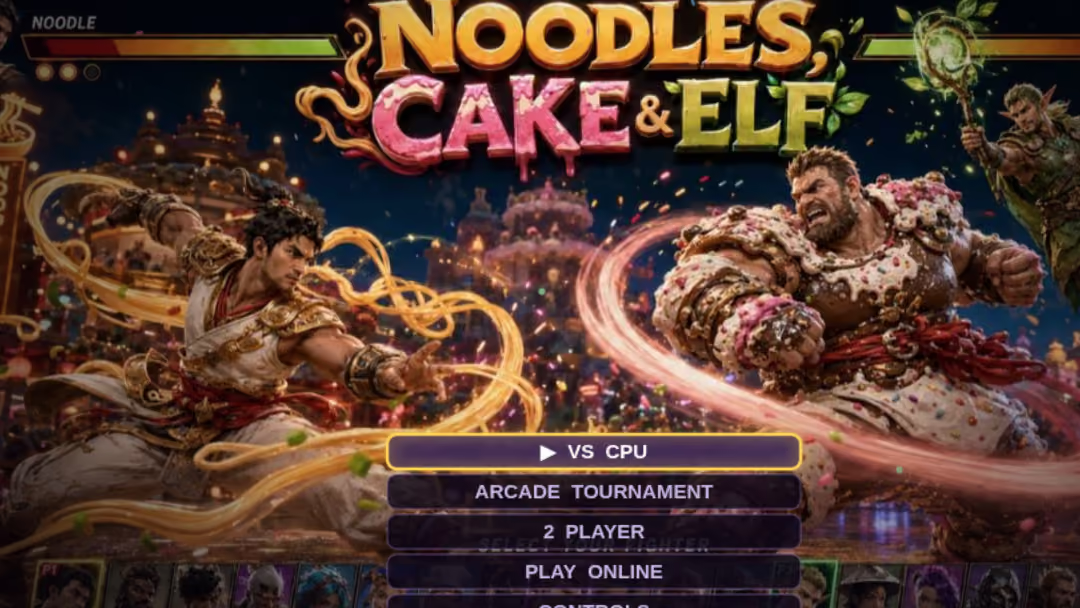
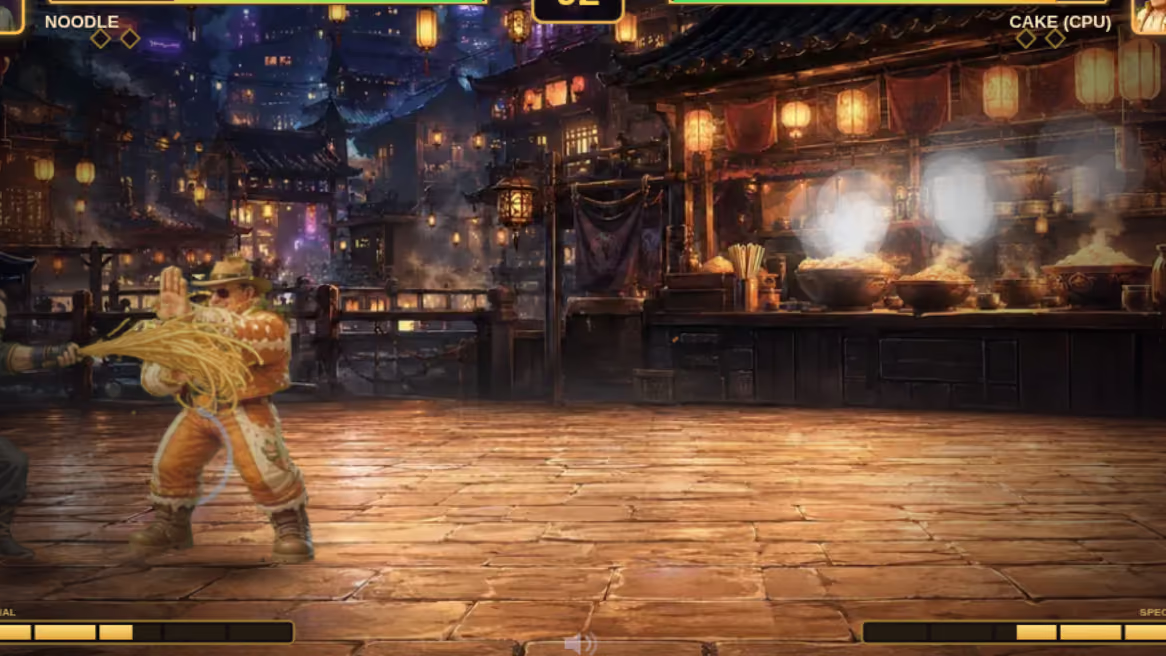
What is on the other end of the link is the question. A photograph gallery works. A playlist works. A short game with the couple in it works particularly well, for one specific reason: guests open it on the night, at the table, and pass the phone around.
That is an unusual property. Most favours are appreciated later, alone. Something guests can open there and then becomes part of the evening rather than a memento of it, and it is the same logic as wedding entertainment instead of a photo booth.
The practical shape for a wedding is short and immediate: a few minutes, no way to lose, the couple recognisable straight away, and playable on a phone held upright by somebody who has had a drink. That last constraint is a genuine design input, and it decides things like control size and whether a game needs both thumbs.
The tiers are £99 for a single level and £349 for a multi-level build. For a favour, the smaller one is usually right, because the thing being optimised is that everybody finishes it rather than that anybody explores it. The reasoning is in how long a custom game should take to finish.
What to avoid
Anything fragile. It will not survive the evening.
Anything that needs carrying and cannot go in a pocket.
Anything with the couple's names and date as the main feature. It is a souvenir of your day given to somebody else.
Sugared almonds, unless the family tradition genuinely calls for them, in which case ignore this entirely.
A favour instead of something guests actually want. If the budget is tight, guests would rather have a better drink, better food, or a taxi contribution than a trinket.
The permission to skip it
Worth saying plainly: a great many weddings have no favours and nobody notices.
It is one of the easiest lines to remove from a budget, and the money moved into food, drink or getting people home is money guests will actually feel. If favours are being included out of obligation rather than because there is something you want to give, skipping them is a completely reasonable decision.
What this means
Edible, useful on the night, or genuinely about you. Everything else is decoration that gets cleared away.
A card with a link beats an object, on take-home rate alone.
And if you are not excited about the favour, do not have one.
More on making the reception itself memorable is in wedding entertainment ideas instead of a photo booth and unique wedding gift ideas.