Secret Santa is a constrained design problem: about ten pounds, a colleague you may barely know, a rule against anything too personal, and a public opening.
Most of what results is landfill. That is not inevitable, and the fixes are small.
Ask somebody who sits near them
The single most effective thing available and almost nobody does it.
One message to a person on their team: what are they actually into. Thirty seconds, and it converts a blind guess into a gift.
The reason it is not done is a slight embarrassment about admitting you do not know. That embarrassment is worth swallowing, because the alternative is a novelty item nobody wanted.
The three categories that work
Consumable and genuinely good. Not a selection box. One thing that is properly nice: coffee from a named roaster, good chocolate, an interesting hot sauce, decent tea. It gets used, it leaves no residue, and quality is visible even at a low price.
Small, useful, and slightly better than the version they own. A good pen if they write. A proper phone cable rather than the fraying one. A decent notebook. Unexciting to open and used for a year.
Specific, from the one thing you know. If you know they cycle, run, garden, read a particular thing, that single fact is enough to make the gift feel aimed rather than assigned.
The common property is that all three would be reasonable gifts if the price were removed. Anything that only works as a cheap gift is a bad gift that happens to be cheap.
What to avoid
Jokes about the person. A gift about somebody's habits, appearance, timekeeping or desk is a public comment made in front of the whole team by somebody who is anonymous. Even affectionate versions land badly for the person on the receiving end, who has to perform amusement.
Anything requiring transport. People go straight to a train after the Christmas do. Anything large, fragile or awkward gets abandoned.
Alcohol as a default. A meaningful proportion of any team does not drink, and it is not always for a reason they want to explain.
Novelty items with a one-use joke. The desk toy, the rude mug, the thing shaped like something else. It is opened, it gets a laugh, it is left in the office kitchen by January.
Anything scented. Very personal, frequently unwanted, occasionally an allergy.

Running one people do not dread
If you are organising it, a few decisions do most of the work.
Make it optional and make the opt-out silent. Ten pounds is not trivial for everybody, and nobody wants to say so in a group message. A form where non-participation is not visible solves it.
Set the budget as a maximum, not a target. Otherwise people feel obliged to hit it.
Collect three interests from everybody when they sign up. This one change improves the quality of every gift in the room and takes each person a minute.
Do the opening quickly. Twenty gifts opened one at a time with a reaction each is forty minutes of everybody waiting. Open them at once, or in small groups.
Include remote and part-time staff properly, or do not do it at all. A Secret Santa that quietly excludes the people not in the office that week is worse than none.
The alternative worth considering
For some teams the honest answer is that Secret Santa produces twenty near-misses and a pile of objects nobody wanted, and the same money spent once would produce something better.
Pooling it works. Twenty people at ten pounds each is two hundred pounds, which buys a decent lunch, a genuine contribution to something everybody uses, a donation to something the team votes on, or something made about the team.
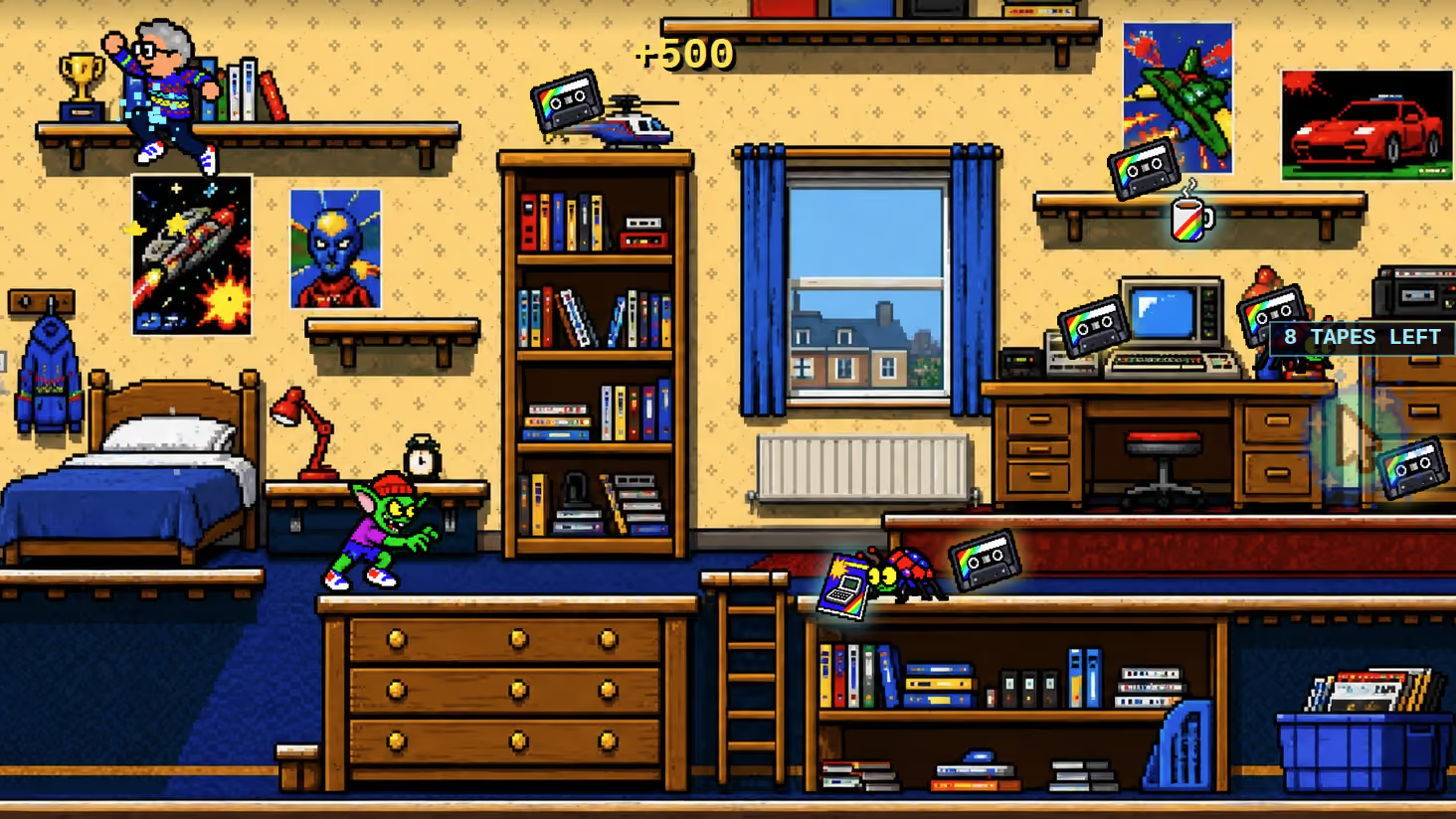
That last option is worth a mention because it does something a pile of individual gifts cannot: it includes everybody. A short commissioned game with the whole team painted in as characters, the office as a level and the year's running jokes as the content is one gift that every person in the room is in.
The tiers are £99 for a single level and £349 for a multi-level build with a proper cast, so the arithmetic works for a team of ten to twenty-five at typical Secret Santa contributions. Keep it short: a team game that takes forty minutes becomes an obligation, which is the argument in how long a custom game should take to finish.
Two cautions. Photographs of colleagues need individual agreement, with an easy way to decline. And the content has to be affectionate rather than pointed, for exactly the reason jokes about individuals fail in a normal Secret Santa.
What this means
Ask somebody who knows them. One message.
Consumable and good is the safest correct answer.
Never make the gift a joke about the person.
And consider pooling it. For a lot of teams that is genuinely the better use of the same money.
For the party itself, office Christmas party entertainment ideas, and for gifts outside the office, Christmas gift for the whole family.