A teacher retiring after a long career has received, at a conservative estimate, several hundred mugs. Also candles, chocolates, hand cream, and a large number of items with apples on them.
None of this is ingratitude on their part. It is arithmetic. Thirty children a year, times a career, and the same six ideas.
What teachers keep
Ask any teacher what they have kept and the answer is consistent to the point of being boring: the letters.
Cards from children, in their own handwriting, saying something specific. Not "thank you for teaching me", but "thank you for helping me with reading when I was rubbish at it" or "you let me look after the class hamster". Those are kept for decades, in boxes, and taken out.
This is worth taking literally rather than treating as a sentiment. If you are organising a class gift and you do only one thing, make it a book of letters from every child, in their own handwriting, unedited.
The unedited part matters for the same reason it matters with grandparents: the value is in the evidence of the child, and tidying it removes exactly that. Spelling mistakes included.
Organising a class gift without annoying everybody
The practical failure mode of a group present is not the gift, it is the collection.
One organiser, one message, one amount. Repeated reminders are what generate resentment, not the request itself.
Make the amount small and the opt-out silent. Not every family can spare it, and none of them want to say so in a group chat. A suggested figure with no register of who paid solves this.
Say what it is for. People contribute more readily to something specific than to a pot.
One good thing rather than thirty small ones. The teacher does not want thirty individual presents, partly because they cannot carry them.
What works instead of a mug
A voucher for something they choose. Unimaginative and honest, and consistently what teachers say they would pick. Bookshop, garden centre, whatever the specific person actually likes.
Something for the thing they do outside school. Which requires knowing, which requires asking. The gift that acknowledges them as a person rather than as a role is the one that stands out in a career of role-based presents.
A plant for the garden, if they garden. It outlives everything else on this list and it is dated by its own growth.
Something with the whole class in it. This is the category worth spending a group budget on, because it is the only kind of gift that can only exist for this particular teacher and this particular year.

A commissioned game as a class gift
An unusual option, and a good fit for one specific reason: it can hold everybody.
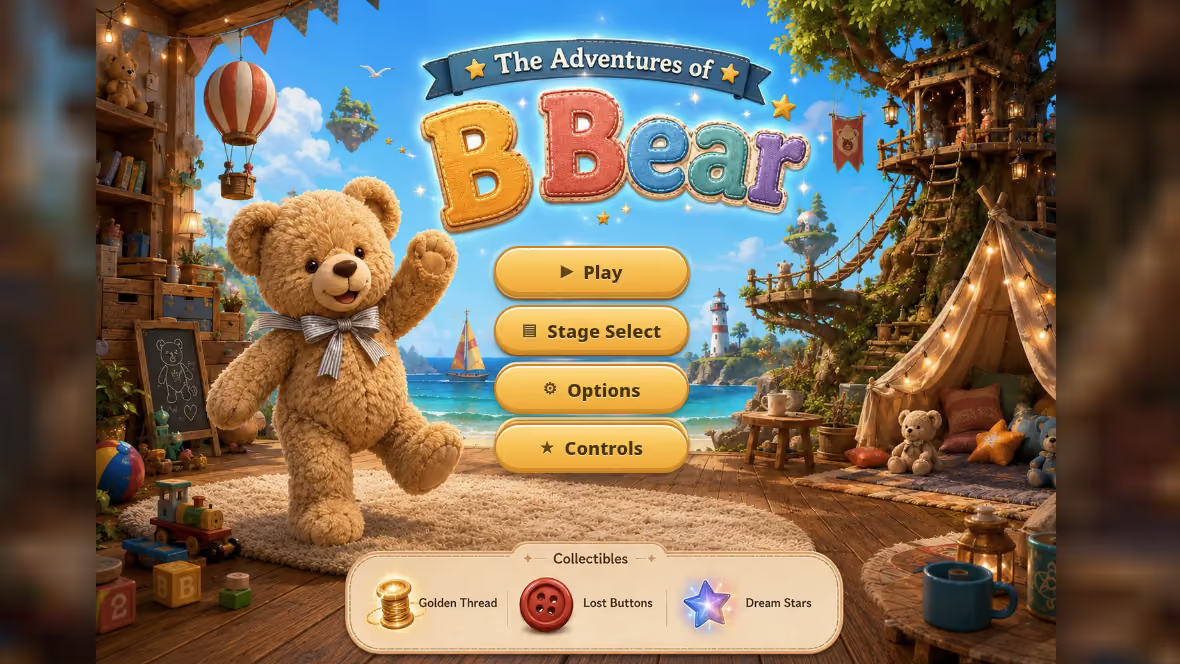
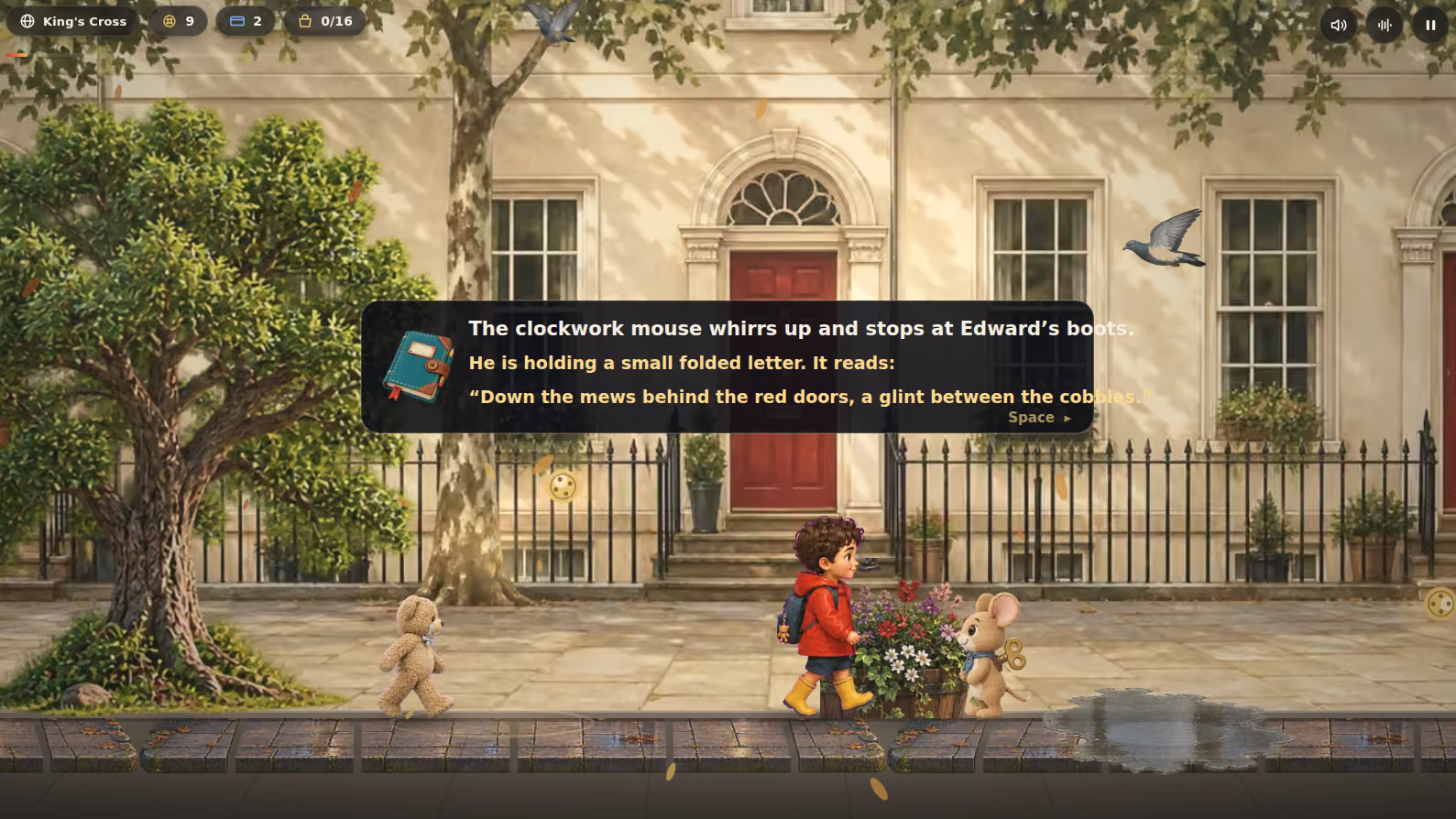
A class of thirty as characters. The classroom, the playground and the corridor as levels. The class pet, the trip everybody remembers, the teacher's specific catchphrase. The teacher as the character being helped, or being rescued, or simply being followed around.
That does something a single object cannot: every family in the class has a reason to have contributed, because their child is in it, and every child has a reason to remember it.
Two practical notes.
The cast is the cost. More characters is more painting, so a full class sits at the multi-level end rather than the single-level one. The tiers are £99 for a single level, £349 for a multi-level build with a cast, which is the realistic bracket for something like this.
Photographs of children need permission. The school will have its own policy on images of pupils and the parents need to know what their child's photograph is being used for. That is a conversation to have with the school before collecting anything, not after. Some classes solve it neatly by having each child draw their own character instead, which is cheaper, avoids the issue entirely, and is arguably better.
That second option is worth taking seriously. Thirty children designing their own characters, painted up in a consistent style, is a gift made by the class rather than a gift bought for them.
If it is one child rather than a class
Different problem, smaller budget, and the answer is simpler.
A letter from the child, specific about something that actually happened, is genuinely the best thing available and it costs nothing. Add something small if you want to, but the letter is the gift.
Resist the urge to write it for them or to correct it. A six-year-old's account of why they liked their teacher is better than any adult's version of the same thing.
What this means
The words are the gift. Everything else is packaging.
One organiser, one ask, easy opt-out.
And if you spend a group budget, spend it on something that can hold the whole class. That is the only thing a class can give that an individual cannot.
The same principle applied to a workplace departure is in retirement gift ideas for a colleague.